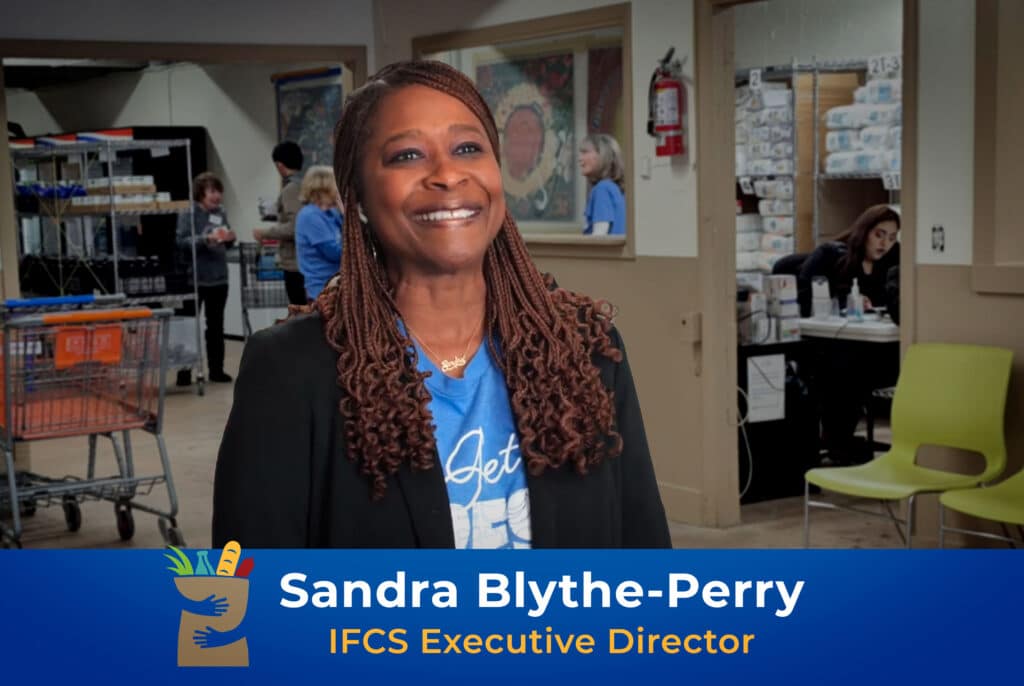
Letter from our Executive Director, Sandra Blythe-Perry
First published November 21st, 2025. We will update this page as the situation evolves.
At Integrated Family Community Services (IFCS), our mission is simple and powerful: To Nourish Lives. Every day, we walk alongside individuals and families facing hunger, unstable housing, and financial crisis in our community.
Today, that mission is being tested again.
Recent federal budget decisions are changing the landscape for food assistance and health coverage. SNAP (the Supplemental Nutrition Assistance Program) is facing cuts and new restrictions. At the same time, enhanced subsidies that help families afford health insurance through the Affordable Care Act (ACA) are on the negotiating table and could expire or be scaled back.
While IFCS does not take political positions, we see — in real time — how these decisions affect the people we serve. Our focus remains on one thing: making sure our neighbors can eat, stay healthy, and keep going, no matter what comes next.
Understanding What’s Changing
SNAP and ACA subsidies are lifelines, not extras.
- SNAP helps families close the gap between what they earn and what food costs. Even with proposals and legislation to keep SNAP funded through September 2026, changes to benefit levels and eligibility rules are expected to reduce the support many households receive and make it harder for some to qualify at all.
- ACA subsidies lower the cost of monthly health insurance premiums. As Congress debates their future, families are already seeing “sticker shock.” In one recent news story, a woman learned that her current premium of “$495.32 for coverage for her and her husband” would be “increasing to $2,168.68” in January, 2026 . That kind of increase is impossible to absorb for most households.
For families already choosing between groceries, rent, and prescriptions, even small cuts in SNAP or increases in health care costs can be the tipping point into crisis.
How SNAP Cuts Hurt Families Here at Home and Across the Country
Here in our community — and in communities across the United States — reductions in SNAP and uncertainty around health coverage will show up in very concrete ways:
- Less food on the table. When SNAP is cut, families do not simply “budget better.” They buy fewer fruits and vegetables, skip meals, and stretch food far beyond what is healthy or safe.
- Impossible tradeoffs. Parents will face choices no one should have to make: pay for groceries, health insurance, rent, gas to get to work, or a child’s medication. There simply isn’t enough to cover everything.
- Ripple effects on health and education. Hunger and gaps in health coverage are linked to higher emergency room use, worse chronic disease outcomes, and lower school performance for children.
- More people turning to food banks as a primary source of food. IFCS is seeing more households using our food assistance, and not as a short-term bridge; instead, the Market @ IFCS is their main grocery store because SNAP and wages no longer keep up.
- Strain on seniors, people with disabilities, and workers hit by layoffs or furloughs. When the cost of health care spikes or SNAP goes down, those already living on fixed or unpredictable incomes feel the shock first and hardest.
These are not abstract policy debates. They are real consequences, felt in kitchens, classrooms, workplaces, and clinics — here in metro Denver and across the country.
Certainty in the Face of Uncertainty: IFCS’ Role
IFCS has been a steady presence through decades of economic and social change — from past recessions and public health emergencies to the recent government shutdowns and funding crises. For more than 60 years, we have collaborated with the community to show up for our neighbors.
We know this much: uncertainty is not going away.
- There could be another government shutdown.
- Households may see unexpected SNAP benefit cutbacks or delays.
- Families may be hit with sudden increases in health insurance costs if ACA subsidies are reduced or allowed to expire.
- Local employers may face layoffs or furloughs as they navigate an unstable economy.
In all of this, IFCS is committed to being a source of certainty in the face of uncertainty.
When people don’t know who to turn to, we intend for the answer to be simple: Turn to IFCS.
Our Response Plan: Prepared, Proactive, and Rooted in Compassion
In light of these looming changes, IFCS is preparing now so we can respond quickly and effectively:
- Scaling up food support. We are planning for an influx of households who may lose or see reductions in SNAP benefits, and we are increasing our capacity to welcome hundreds of new families if needed.
- Helping neighbors navigate complex systems. Our team is focused on connecting people to every resource available — from food and rental assistance to information about health coverage options.
- Strengthening partnerships. We are working closely with other nonprofits, schools, faith communities, and local leaders to identify emerging needs and coordinate support.
- Maintaining flexibility for crisis response. Whether the next shock comes from a government shutdown, a spike in healthcare costs, or another economic disruption, IFCS is committed to pivoting quickly and filling the gaps.
- Lifting up community voices. While we do not align with any party or platform, we do share what we are seeing with community leaders and policymakers so that decisions are informed by the lived experiences of our neighbors.
We are here. We are ready. And we will stay ready.
A Call to Action: Your Role in Protecting Our Community
Now is a critical moment for our community to stand together.
- Donors – Your generosity keeps our shelves stocked and our programs running. If you are able, please consider making a gift or increasing your support so we can be ready for the wave of need that may follow SNAP cuts and changes to ACA subsidies.
- Volunteers – Your time and energy are essential. Every box packed, every cart pushed, every warm greeting at our doors makes a difference for someone walking through a hard season.
- Community Partners and Employers – Join us in identifying employees, students, and families who may be at risk if benefits change. Together, we can respond faster and more effectively.
- Community Leaders and Policymakers – We invite you to listen closely to the families most affected by these changes, and to support solutions that protect food security and access to health care. The decisions made in the months ahead will shape daily life for millions of people.
- Neighbors in Need – If you are worried about putting food on the table, keeping the lights on, or affording health care, you are not alone. IFCS is here for you. Please reach out.
Whatever happens across the country—whether policy changes, natural disasters, or economic challenges, IFCS will remain committed to nourishing lives here at home. Together, we can ensure that no one in our community faces hunger or crisis alone.
 With gratitude,
Sandra Blythe-Perry
Executive Director
Contact Sandra Here
Read Sandra’s July 2025 statement: Committed to Community — No Matter What Comes Next