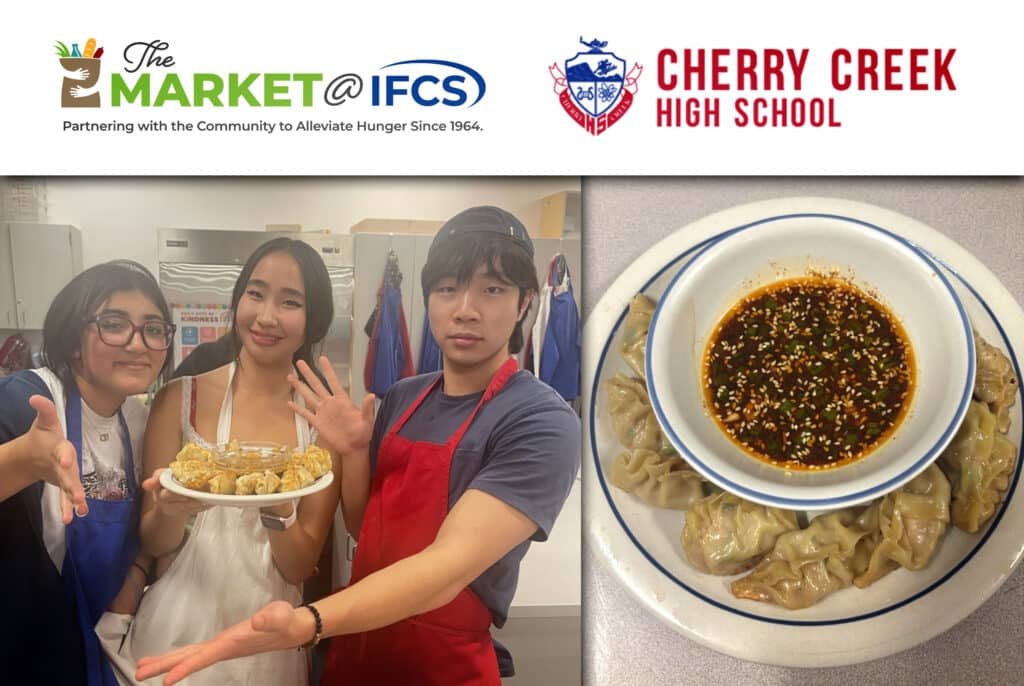
Our guest bloggers, students of the Cherry Creek High School Cooking Club, are returning with another recipe using common ingredients stocked on shelves in the Market @ IFCS. We invite our participants and supporters to try this recipe, and thank the Cooking Club for sharing another happy adventure in the kitchen together!
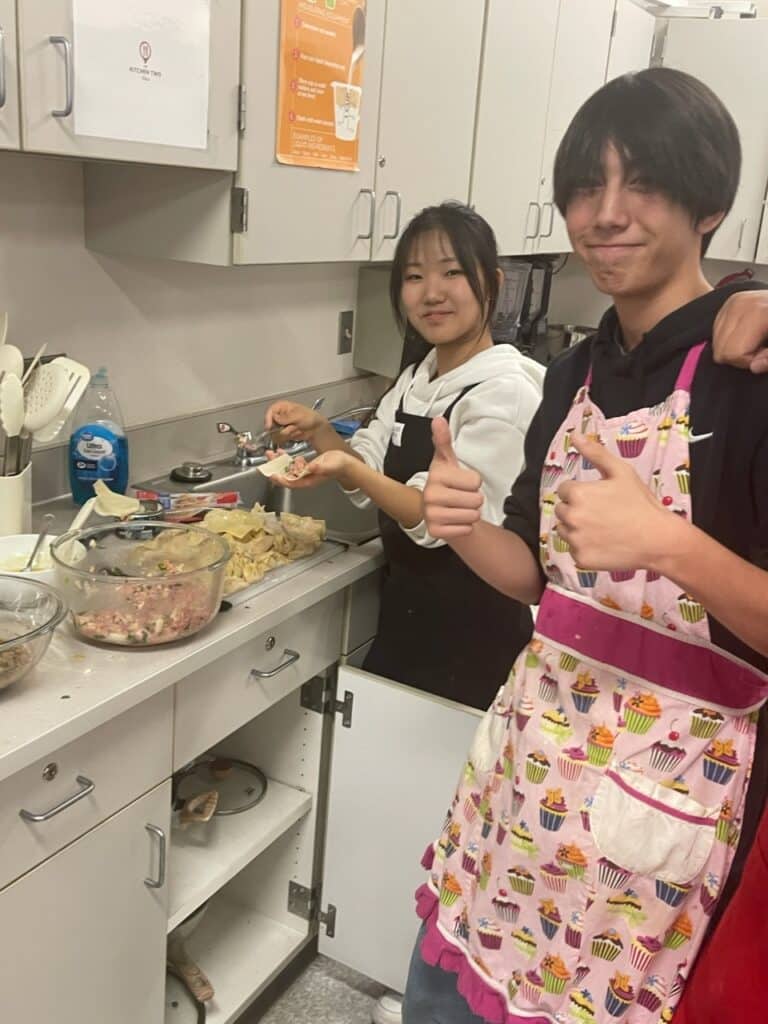
Cherry Creek High School has recently concluded making potstickers! At Cooking Club, we believe that food not only nourishes, but also connects one another, forming a wonderful community. This month, our student team prepared a batch of homemade pork pot stickers, a dish which represents the heart of our mission: serving families in need with compassion and dignity.
These potstickers may be small, but they embody the reminder that even the smallest acts of care can make a meaningful difference. Each one is hand-folded, packed with fresh ingredients, but most importantly, made with intention.
Recipe
This recipe combines ground pork, fresh baby bok choy, water chestnuts, green onions, garlic, and ginger, creating a filling that is deeply satisfying (and nutritious of course). Wrapped in thin wonton wrappers and pan-seared, the postickers deliver comforting flavors. From the inspiration of our Club President, we prepared Korean-inspired yangnyeom ganjang dipping sauce made with soy sauce, rice vinegar, sesame oil, chili powder, garlic, and scallions, all of which balance a savory heat.
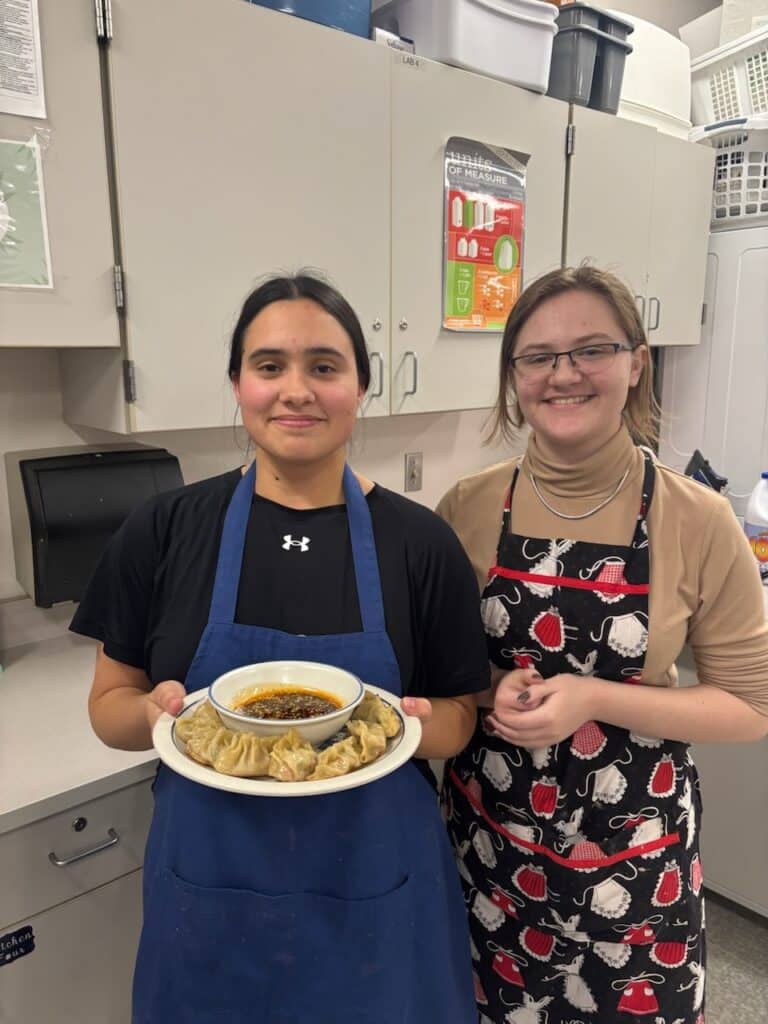
Our Team Effort
Making potstickers is a hands-on experience, and our group embraced every step. We mixed the filling, brushed the edges of each wrapper, practiced certain techniques, and arranged each potsticker neatly before cooking. Such a simple recipe soon became a team-building moment that was filled with laughter and shared purpose.
The kitchen soon filled with warmth, from the food and the collaboration of everyone working together.
Why Potstickers Matter
For many families in the Denver area, access to comforting, homemade meals can be limited. Potstickers offer a practical recipe that freezes well and can be shared easily with households facing food insecurity. Their versatility makes them ideal for large-batch cooking during a wide range of events. Their comforting flavors make them a favorite across cultures and age groups!
At CCHS Cooking Club, we strive to create meals that bring joy and dignity to those around us. Through IFCS we can make this mission a reality. Hand-folding each potsticker represents the care and community effort dedicated to ensuring that every family feels supported.
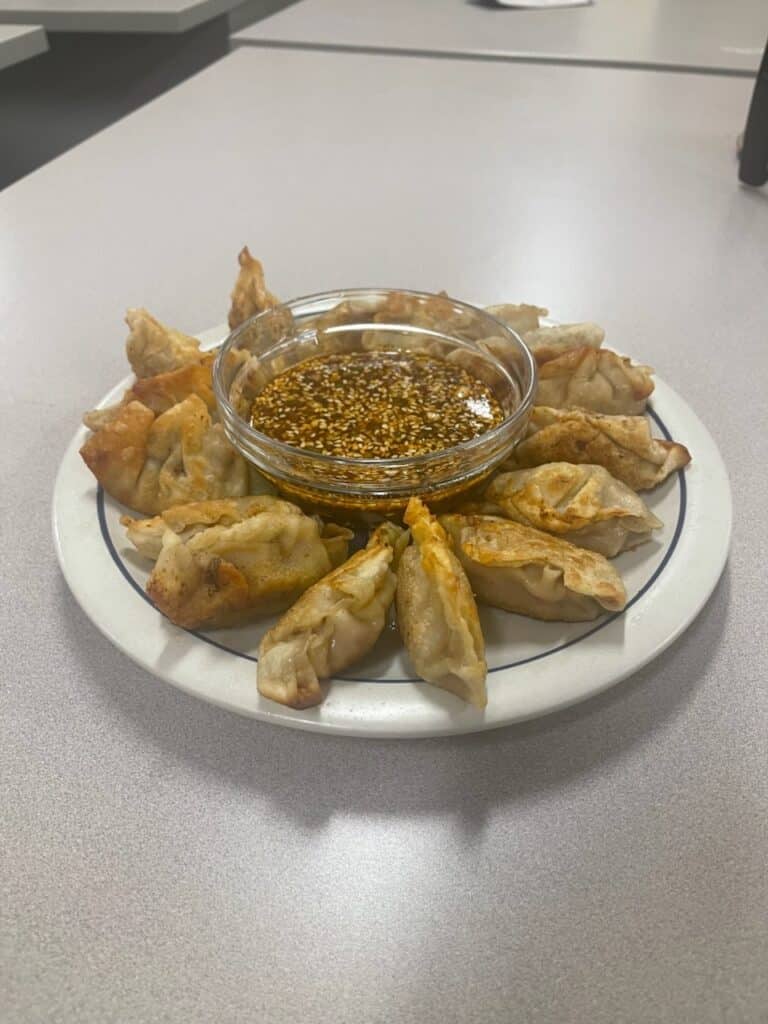
Moving Forward
Our cooking projects remind us that food is one of the most meaningful ways to show compassion. These meals bring us together at CCHS, and we hope that will be the same for everybody. We look forward to continuing this work one meal, one act of kindness at a time.
Until Next Time,
CCHS Cooking Club
CLICK HERE for the printable recipe by Spoon Fork Bacon
Potstickers
This recipe makes about 40 potstickers!
Ingredients:
For the pork filling
- 30 ounces ground pork
- 2.5 baby bok choy, diced 15 water chestnuts, diced
- 5 green onions, thinly sliced
- 5 garlic cloves, minced
- 5 teaspoons minced fresh ginger
- 2.5 teaspoon sesame oil
- 5 teaspoon salt
- 1.25 teaspoon cracked black pepper
- 2.5 egg, lightly beaten
For the assembly
- 2.5 egg, lightly beaten
- 100 round wonton wrappers
- 10 tablespoons vegetable oil, divided
For the yangnyeom ganjang
- 0.83 cup soy sauce (about 13 tablespoons, or roughly just under 1 cup)
- 5 tablespoons rice vinegar
- 5 teaspoons sesame oil
- 3.75 teaspoons gochujaru (Korean chili powder) 5 garlic cloves, minced
- 2.5 green onion, thinly sliced
- 2.5 teaspoon toasted sesame seeds
Instructions:
-
Place all filling ingredients into a bowl and mix together until well combined. Set aside.
-
Brush perimeter of a wonton wrapper with the beaten egg and fill center with 1 heaping tablespoon of pork filling.
-
Open your dominant hand, palm side up, and hold fingers together.
-
Place the filled and open wonton wrapper onto your fingers and fold the wrapper in half, only sealing the corner of one side.
-
Using your other hand, push small pleats onto one side of the wrapper, pressing and sealing with the hand holding the potsticker.
-
Set aside and repeat until all filling and wrappers have been used.
-
Heat a large, heavy bottom skillet over medium heat and add 2 tablespoons oil.
-
Add 5 to 6 pot stickers to skillet, so the crimped side is up, and pan-fry for 3 to 4 minutes.
-
Add about 3 tablespoons water to the pan and cover for 2 to 4 minute or until the wonton wrappers have softened and steamed and the filling has finished cooking through.
-
Remove from heat and repeat until all potstickers have been cooked. Serve immediately with dipping sauce.
-
Choganjang: Place all ingredients into a small bowl and whisk together. Serve with potstickers.
Special Notes:
- Freeze Ahead: Line a baking sheet with a piece of parchment then place uncooked potstickers onto the baking sheet about 1/2 inch apart (they shouldn’t touch one another). Then pop them into the freezer for a couple of hours. Once they are completely frozen you can transfer them into a resealable bag. They will keep for 3 to 4 months.
- To Steam: Fill a pot with a couple inches of water and top with a bamboo steamer (or a metal steamer basket). Line steamer base or basket with a single layer of lettuce leaves (such as savoy lettuce). Place potstickers over lettuce about 1 inch apart and cover with lid. Place pot over medium-high heat and steam for about 10 minutes or until filling has cooked through.
- Tip: It’s helpful to remove the skillet from the heat before adding the water, then quickly covering before returning the skillet to the stovetop. This will help to prevent any of the oil in the skillet from spattering up and possibly catching on fire from the stovetop flames
(particularly if using a gas stovetop).