
IFCS | A Denver Area Food Bank and More to Nourish Lives

CORPORATE PHILANTHROPY
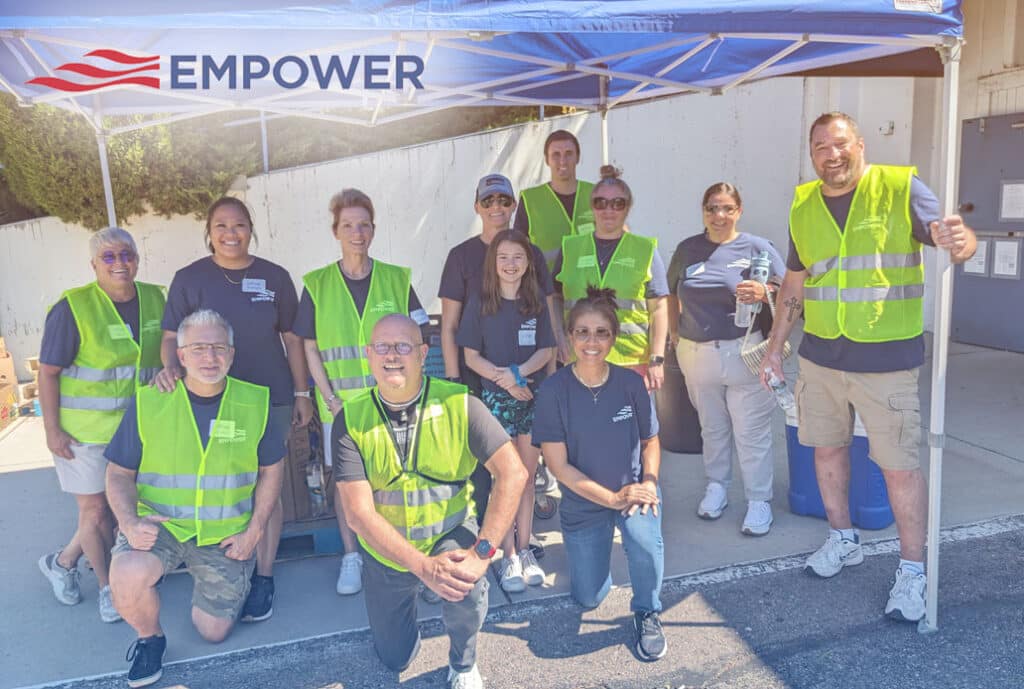
Corporate Giving: Help Your Company Fight Hunger in Denver

Your company has the power to do more than make a profit — it can make a difference.

Through corporate giving, your business can help fight hunger across the greater Denver metro area while building a stronger, more compassionate brand.

At Integrated Family Community Services (formerly known as Interfaith Community Services), we partner with companies that want their philanthropy to create real, measurable impact in their own community.

Partner with IFCS through a corporation donation:

Local Giving, Real Results

Because IFCS serves the greater Denver metro area, your company’s donation stays local.

That means:

  • Your support feeds families in your own community
  • Your impact is visible and measurable
  • Your company becomes a leader in fighting hunger

Businesses partner with IFCS because it offers:

  • Local community impact
  • Clear, measurable outcomes
  • A trusted nonprofit partner
  • Meaningful engagement for employees

Your company’s support helps feed families, stabilize households, and strengthen the communities where your employees live and work.

Corporate partners can support IFCS in many ways:

  • Corporate Donations: Make a direct financial contribution to support hunger relief and family stabilization.
  • Sponsorships: Support special programs, seasonal food drives, or community initiatives.
  • Employee Giving: Encourage employees to donate or participate in food drives and volunteer programs.
  • Community Leadership: Show customers and partners that your company stands for something meaningful.

Food insecurity affects:

  • Your employees
  • Your customers
  • Your neighbors

By partnering with IFCS, your company becomes part of the solution.

This creates:

  • Stronger communities
  • A better brand reputation
  • Real social impact

Let's Make an Impact Together

Whether your company gives $1,000 or $100,000, your partnership with IFCS helps change lives.

Reach out today to learn how your business can support hunger relief in Denver.

Make a Corporate Donation to IFCS Now:
Ready for a Conversation? 

ABOUT US

In 1964, a local resident brought together neighborhood leaders to launch a “Neighbors Helping Neighbors” initiative, and formed the original Inter-Faith Task Force for Community Services.

Learn how IFCS was formed to support individuals in achieving independent living. 

PARTNER WITH IFCS

IFCS offers a variety of partnership opportunities, including supporting events like Nibbles & Sips, hosting drives, and contributing to seasonal programs that help families in need.

Learn how corporate partners can donate, volunteer as a team, or create custom giving programs to make a lasting community impact.

IFCS PARTNERS

Community connections are essential to IFCS’ work, made possible by strong partnerships with local businesses, organizations, and service agencies.

See a list of IFCS partners that share a commitment to the community and play a vital role in IFCS’ ongoing success.

OFFERING HOLIDAY HELP AS A COMPANY

Corporate partners contribute funding and organize collective efforts that directly support IFCS’ seasonal programs.

Read this blog entry and learn how Powers Products organized employees to raise money and sponsor children as part of the Helping Hands for the Holidays program.
With your ongoing support, IFCS continues to be a consistent resource that nourishes lives in our community. Thank you!

Non-Discrimination Statement

In accordance with federal civil rights law and U.S. Department of Agriculture (USDA) civil rights regulations and policies, this institution is prohibited from discriminating on the basis of race, color, national origin, sex (including gender identity and sexual orientation), disability, age, or reprisal or  retaliation for prior civil rights activity.

Program information may be made available in languages other than English. Persons with disabilities who require alternative means of communication to obtain program information (e.g., Braille, large print, audiotape, American Sign Language), should contact the responsible state or local agency that administers the program or USDA’s TARGET Center at (202) 720-2600 (voice and TTY) or contact USDA through the Federal Relay Service at (800) 877-8339.

To file a program discrimination complaint, a Complainant should complete a Form AD-3027, USDA Program Discrimination Complaint Form which can be obtained online, from any USDA office, by calling (866) 632-9992, or by writing a letter addressed to USDA. The letter must contain the complainant’s name, address, telephone number, and a written description of the alleged discriminatory action in sufficient detail to inform the Assistant Secretary for Civil Rights (ASCR) about the nature and date of an alleged civil rights violation. The completed AD-3027 form or letter must be submitted to USDA by:

  1. Mail:
    U.S. Department of Agriculture
    Office of the Assistant Secretary for Civil Rights
    1400 Independence Avenue, SW
    Washington, D.C. 20250-9410; or
  2. Fax:
    (833) 256-1665 or (202) 690-7442; or 
  3. Email:
    program.intake@usda.gov

This institution is an equal opportunity provider.

This statement was updated 8.3.22 in accordance with USDA updates and guidelines.

Eligibility Guidelines

IFCS Enrichment Programs have service area and income guidelines.

SERVICE AREA GUIDELINES:
For IFCS Enrichment Programs, we have a service area covering:

  • Western Arapahoe County: Centennial, Englewood, Glendale, Greenwood Village, Littleton, Sheridan, and unincorporated Arapahoe County.
  • Southwest Denver Neighborhoods: Bear Valley, College View, Fort Logan, Harvey Park, Harvey Park South, Marston & South Platte (Southwest Neighborhoods further defined as being south of Jewell and west of Santa Fe).
  • Northern Douglas County: Highlands Ranch, Littleton, and Lone Tree.
  • Jefferson County: All addresses within the county will be considered.

Applications outside of these listed areas will not be accepted.


INCOME GUIDELINES:
As of March 1, 2026, a household may meet income-based standards in either of the following two ways:

  1. Participate in one of these public assistance programs:
    • Commodity Supplemental Food Program (CSFP)
    • Supplemental Nutrition Assistance Program (SNAP)
    • Low-income Energy Assistance Program (LEAP)
    • Temporary Assistance to Needy Families (TANF)
    • Old Age Pension (OAP)
    • Aid to Needy Disabled (AND)
    • Aid to the Blind (AB)
    • Supplemental Security Income (SSI)
    • Medicaid Eligible Foster Children
  1. If the household does not participate in any of the above public assistance programs, the household must have a combined gross income that does not exceed the maximum income limit for the applicable household size.

ADDITIONAL ELIGIBILITY GUIDELINES:
Please refer to the Interest Form for additional, program-specific criteria.

Eligibility and Income Guidelines

Anyone experiencing food insecurity and self-identifying as meeting the Income Guidelines below is eligible for IFCS Food Market services.

Income Guidelines:
As of March 1, 2026, a household may meet income-based standards in either of the following two ways:

  1. Participate in one of these public assistance programs:
    • Commodity Supplemental Food Program (CSFP)
    • Supplemental Nutrition Assistance Program (SNAP)
    • Low-income Energy Assistance Program (LEAP)
    • Temporary Assistance to Needy Families (TANF)
    • Old Age Pension (OAP)
    • Aid to Needy Disabled (AND)
    • Aid to the Blind (AB)
    • Supplemental Security Income (SSI)
    • Medicaid Eligible Foster Children
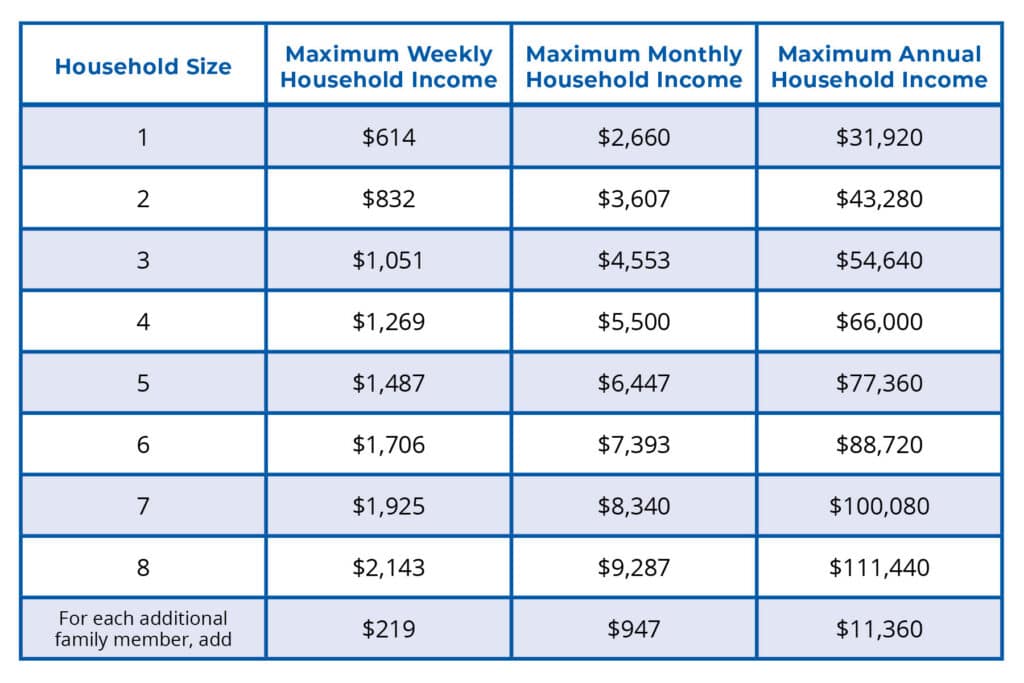
  1. If the household does not participate in any of the above public assistance programs, the household must meet the requirements based on the chart below, having a combined gross income not exceeding the maximum income limit for the applicable household size.

For IFCS Financial Assistance Programs (Rental and Utility Bill Payment Assistance) and seasonal Enrichment Programs, we have a service area covering:

  • Western Arapahoe County: Centennial, Englewood, Glendale, Greenwood Village, Littleton, Sheridan, and unincorporated Arapahoe County.
  • Southwest Denver Neighborhoods: Bear Valley, College View, Fort Logan, Harvey Park, Harvey Park South, Marston & South Platte (Southwest Neighborhoods further defined as being south of Jewell and west of Santa Fe).
  • Northern Douglas County: Highlands Ranch, Littleton, and Lone Tree.
  • Jefferson County: All addresses within the county will be considered.

 Applications outside of these listed areas will not be accepted. (Central Denver, North Denver, and Aurora applications will not be accepted.)