

IFCS | A Denver Area Food Bank and More to Nourish Lives

FEED A FAMILY

Your Donation Puts Food on the Table

When you donate to feed a family, you’re not giving to an idea —
you’re giving to real people who need food right now.

Across the Denver metro area, families are facing impossible choices:

  • Rent or groceries
  • Medicine or meals
  • Gas or food

Your donation to Integrated Family Community Services (Formerly Interfaith Community Services) is turned directly into meals for families in crisis.

Feed a family today:

Your Gift Creates Immediate Impact for Colorado Families

When you give to IFCS, your money goes to work right away:

  • Buying food
  • Stocking shelves
  • Serving families
  • Stabilizing households

Nourishing lives is one of the fastest ways to put compassion into action, addressing Colorado hunger and building stronger communities.

It means a household gets:

  • Nutritious groceries
  • Enough food for multiple meals
  • Relief from the stress of hunger

For parents, it means being able to provide. For children, it means full bellies and better focus at school. For seniors, it means dignity and health.

This is what your gift creates.

Every donation makes a difference:

  • $25 feeds a family for a day.
  • $50 adds fresh items to an IFCS Market shopper’s cart–such as apples, oranges, bananas and fresh veggies.
  • $65 provides a collection of fresh produce and shelf-stable food items.
  • $100 contributes 1 grocery basket of food to the market shelves.
  • $250 supplies a cart of groceries for a family.

Your generosity is turned into real food that families can use immediately. This food alleviates hunger and stress, contributing to better health outcomes for families and communities.

Food insecurity is rising in the greater Denver metro area due to:

  • High housing costs
  • Inflation
  • Medical emergencies
  • Job instability

IFCS provides both emergency food and family support so households can recover — not just survive.

Your donation keeps families from falling deeper into crisis.

Be the Reason a Family Eats Tonight

You don’t have to change the whole world — you just have to change someone’s world.

Your donation today can make sure a Denver-area family doesn’t go hungry.

Feed a family now:
Questions? 

HUNGER IN COLORADO

IFCS serves neighborhoods identified as food deserts and high-need zip codes, where limited access to supermarkets increases the risk of chronic diseases like diabetes and obesity. 

Learn about how IFCS’ programs and services are addressing hunger in the Denver metro region.

TOUR WITH TODD!

Whether you’ve supported IFCS in the past, are currently involved, or are thinking about getting involved, we warmly invite you to tour our facility.

Learn how community partnerships play a vital role in enhancing our services and creating a welcoming space for those we serve. Come see our latest developments firsthand!

MORE WAYS TO GIVE

IFCS offers many ways to give, including one-time or recurring donations, corporate or legacy gifts, bitcoin, or in-kind donations.

Supporters can also contribute through creative efforts like birthday fundraisers, volunteering, and food or toiletry drives.

GET INVOLVED

IFCS offers multiple ways to get involved, including donating, volunteering, hosting food or hygiene drives, and forming community or corporate partnerships to help address food insecurity.

Learn how community contributions enhance services and impact those in need.
With your ongoing support, IFCS continues to be a consistent resource that nourishes lives in our community. Thank you!

Non-Discrimination Statement

In accordance with federal civil rights law and U.S. Department of Agriculture (USDA) civil rights regulations and policies, this institution is prohibited from discriminating on the basis of race, color, national origin, sex (including gender identity and sexual orientation), disability, age, or reprisal or  retaliation for prior civil rights activity.

Program information may be made available in languages other than English. Persons with disabilities who require alternative means of communication to obtain program information (e.g., Braille, large print, audiotape, American Sign Language), should contact the responsible state or local agency that administers the program or USDA’s TARGET Center at (202) 720-2600 (voice and TTY) or contact USDA through the Federal Relay Service at (800) 877-8339.

To file a program discrimination complaint, a Complainant should complete a Form AD-3027, USDA Program Discrimination Complaint Form which can be obtained online, from any USDA office, by calling (866) 632-9992, or by writing a letter addressed to USDA. The letter must contain the complainant’s name, address, telephone number, and a written description of the alleged discriminatory action in sufficient detail to inform the Assistant Secretary for Civil Rights (ASCR) about the nature and date of an alleged civil rights violation. The completed AD-3027 form or letter must be submitted to USDA by:

  1. Mail:
    U.S. Department of Agriculture
    Office of the Assistant Secretary for Civil Rights
    1400 Independence Avenue, SW
    Washington, D.C. 20250-9410; or
  2. Fax:
    (833) 256-1665 or (202) 690-7442; or 
  3. Email:
    program.intake@usda.gov

This institution is an equal opportunity provider.

This statement was updated 8.3.22 in accordance with USDA updates and guidelines.

Eligibility Guidelines

IFCS Enrichment Programs have service area and income guidelines.

SERVICE AREA GUIDELINES:
For IFCS Enrichment Programs, we have a service area covering:

  • Western Arapahoe County: Centennial, Englewood, Glendale, Greenwood Village, Littleton, Sheridan, and unincorporated Arapahoe County.
  • Southwest Denver Neighborhoods: Bear Valley, College View, Fort Logan, Harvey Park, Harvey Park South, Marston & South Platte (Southwest Neighborhoods further defined as being south of Jewell and west of Santa Fe).
  • Northern Douglas County: Highlands Ranch, Littleton, and Lone Tree.
  • Jefferson County: All addresses within the county will be considered.

Applications outside of these listed areas will not be accepted.


INCOME GUIDELINES:
As of March 1, 2026, a household may meet income-based standards in either of the following two ways:

  1. Participate in one of these public assistance programs:
    • Commodity Supplemental Food Program (CSFP)
    • Supplemental Nutrition Assistance Program (SNAP)
    • Low-income Energy Assistance Program (LEAP)
    • Temporary Assistance to Needy Families (TANF)
    • Old Age Pension (OAP)
    • Aid to Needy Disabled (AND)
    • Aid to the Blind (AB)
    • Supplemental Security Income (SSI)
    • Medicaid Eligible Foster Children
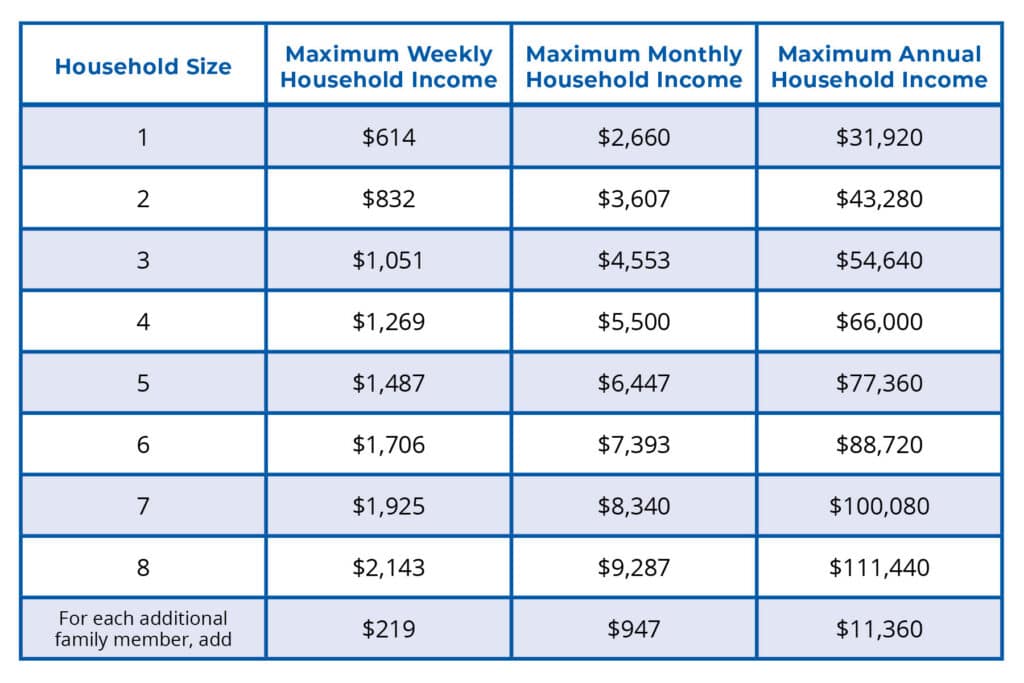
  1. If the household does not participate in any of the above public assistance programs, the household must have a combined gross income that does not exceed the maximum income limit for the applicable household size.

ADDITIONAL ELIGIBILITY GUIDELINES:
Please refer to the Interest Form for additional, program-specific criteria.

Eligibility and Income Guidelines

Anyone experiencing food insecurity and self-identifying as meeting the Income Guidelines below is eligible for IFCS Food Market services.

Income Guidelines:
As of March 1, 2026, a household may meet income-based standards in either of the following two ways:

  1. Participate in one of these public assistance programs:
    • Commodity Supplemental Food Program (CSFP)
    • Supplemental Nutrition Assistance Program (SNAP)
    • Low-income Energy Assistance Program (LEAP)
    • Temporary Assistance to Needy Families (TANF)
    • Old Age Pension (OAP)
    • Aid to Needy Disabled (AND)
    • Aid to the Blind (AB)
    • Supplemental Security Income (SSI)
    • Medicaid Eligible Foster Children
  1. If the household does not participate in any of the above public assistance programs, the household must meet the requirements based on the chart below, having a combined gross income not exceeding the maximum income limit for the applicable household size.

For IFCS Financial Assistance Programs (Rental and Utility Bill Payment Assistance) and seasonal Enrichment Programs, we have a service area covering:

  • Western Arapahoe County: Centennial, Englewood, Glendale, Greenwood Village, Littleton, Sheridan, and unincorporated Arapahoe County.
  • Southwest Denver Neighborhoods: Bear Valley, College View, Fort Logan, Harvey Park, Harvey Park South, Marston & South Platte (Southwest Neighborhoods further defined as being south of Jewell and west of Santa Fe).
  • Northern Douglas County: Highlands Ranch, Littleton, and Lone Tree.
  • Jefferson County: All addresses within the county will be considered.

 Applications outside of these listed areas will not be accepted. (Central Denver, North Denver, and Aurora applications will not be accepted.)