
IFCS | A Denver Area Food Bank and More to Nourish Lives

Setting the Table for All: LaToya’s Story of Gratitude

October is Disability Awareness Month, highlighting the importance of inclusion, equity, and understanding for people with visible disabilities as well as those with more hidden disabilities such as autism, dyslexia, and mental health disorders.

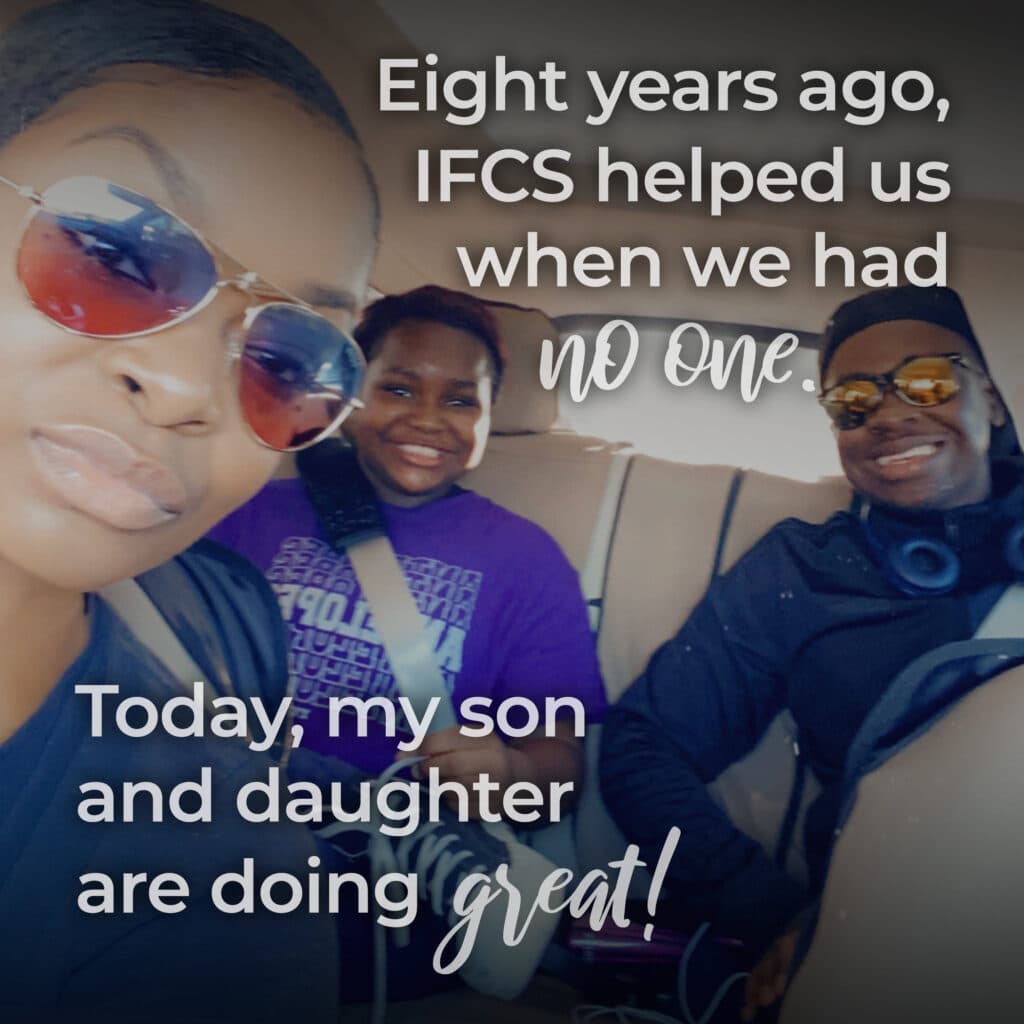
IFCS is committed to promoting inclusivity and accessibility for all in our community, so this month we’d like to highlight the story of one of our program participants. Last winter, LaToya wrote us to share her story. Seven or eight years prior, she and her children moved to Colorado, and she visited IFCS to participate in the Ready, Set, School! program that provided her children with backpacks and school supplies. She wrote us, “Since then, my son has become a great student, a delegate of future physicians of America, a member of the National honors society and has joined the military.” He graduated basic training in November of 2024. LaToya also shared that her daughter was doing incredibly well, and expressed her gratitude: “Thanks for the love and support you gave us when we had no one else to turn to.”

October holds a special place in LaToya’s heart, because when she was just six years old, her mother became disabled. Growing up, she witnessed both the struggles and the strength her mother displayed during her stays in nursing homes. In 2009, LaToya had the opportunity to bring her mother home and care for her—an experience that profoundly changed her life. It deepened her passion for caregiving, filled a void in her heart, and allowed her to feel a true sense of love for family. Having grown up in foster care without the support of a family, she chose to focus not on the challenges of that upbringing, but on the rewards it brought her.

Disability also shaped LaToya’s journey as a mother. At the age of two, her son was diagnosed with autism and a learning disability. The path was not always easy, but she watched him grow, thrive, and overcome obstacles in ways that inspired her every day. She watched him heal and today, her son is proudly serving in the United States Army as a 25U Signal Operations Specialist. While his disability didn’t define him, LaToya is grateful that he is no longer living with that disability and is pursuing a career that engages his unique skills.
To LaToya, Disability Awareness Month is not just about acknowledging struggles—it’s about honoring the resilience, courage, and beauty that shine through adversity. It’s about recognizing those who have paved the way for inclusion and accessibility, and amplifying the voices of those still fighting to be heard. In her eyes, disability never defines a person. “My mom is more than her disability. My son is more than his diagnosis,” she says. “And every individual deserves respect, dignity, and the chance to live fully and freely.”

Thanks to LaToya for sharing her personal story with us, and for returning to IFCS as a supporter after all these years. We’re grateful to hear that the generosity of IFCS donors and student sponsors were able to uplift her and her children as part of the Ready, Set, School! program. We’re grateful too, that she is celebrating the journey, the victories, and the love that disability has brought into her life. As IFCS continues to build inclusivity and accessibility features into our programs, building, and online resources, we are grateful for LaToya’s commitment to learning, advocating, and building a world where all abilities are embraced.
Non-Discrimination Statement

In accordance with federal civil rights law and U.S. Department of Agriculture (USDA) civil rights regulations and policies, this institution is prohibited from discriminating on the basis of race, color, national origin, sex (including gender identity and sexual orientation), disability, age, or reprisal or  retaliation for prior civil rights activity.

Program information may be made available in languages other than English. Persons with disabilities who require alternative means of communication to obtain program information (e.g., Braille, large print, audiotape, American Sign Language), should contact the responsible state or local agency that administers the program or USDA’s TARGET Center at (202) 720-2600 (voice and TTY) or contact USDA through the Federal Relay Service at (800) 877-8339.

To file a program discrimination complaint, a Complainant should complete a Form AD-3027, USDA Program Discrimination Complaint Form which can be obtained online, from any USDA office, by calling (866) 632-9992, or by writing a letter addressed to USDA. The letter must contain the complainant’s name, address, telephone number, and a written description of the alleged discriminatory action in sufficient detail to inform the Assistant Secretary for Civil Rights (ASCR) about the nature and date of an alleged civil rights violation. The completed AD-3027 form or letter must be submitted to USDA by:

  1. Mail:
    U.S. Department of Agriculture
    Office of the Assistant Secretary for Civil Rights
    1400 Independence Avenue, SW
    Washington, D.C. 20250-9410; or
  2. Fax:
    (833) 256-1665 or (202) 690-7442; or 
  3. Email:
    program.intake@usda.gov

This institution is an equal opportunity provider.

This statement was updated 8.3.22 in accordance with USDA updates and guidelines.

Eligibility Guidelines

IFCS Enrichment Programs have service area and income guidelines.

SERVICE AREA GUIDELINES:
For IFCS Enrichment Programs, we have a service area covering:

  • Western Arapahoe County: Centennial, Englewood, Glendale, Greenwood Village, Littleton, Sheridan, and unincorporated Arapahoe County.
  • Southwest Denver Neighborhoods: Bear Valley, College View, Fort Logan, Harvey Park, Harvey Park South, Marston & South Platte (Southwest Neighborhoods further defined as being south of Jewell and west of Santa Fe).
  • Northern Douglas County: Highlands Ranch, Littleton, and Lone Tree.
  • Jefferson County: All addresses within the county will be considered.

Applications outside of these listed areas will not be accepted.


INCOME GUIDELINES:
As of March 1, 2025, a household may meet income-based standards in either of the following two ways:

  1. Participate in one of these public assistance programs:
    • Commodity Supplemental Food Program (CSFP)
    • Supplemental Nutrition Assistance Program (SNAP)
    • Low-income Energy Assistance Program (LEAP)
    • Temporary Assistance to Needy Families (TANF)
    • Old Age Pension (OAP)
    • Aid to Needy Disabled (AND)
    • Aid to the Blind (AB)
    • Supplemental Security Income (SSI)
    • Medicaid Eligible Foster Children
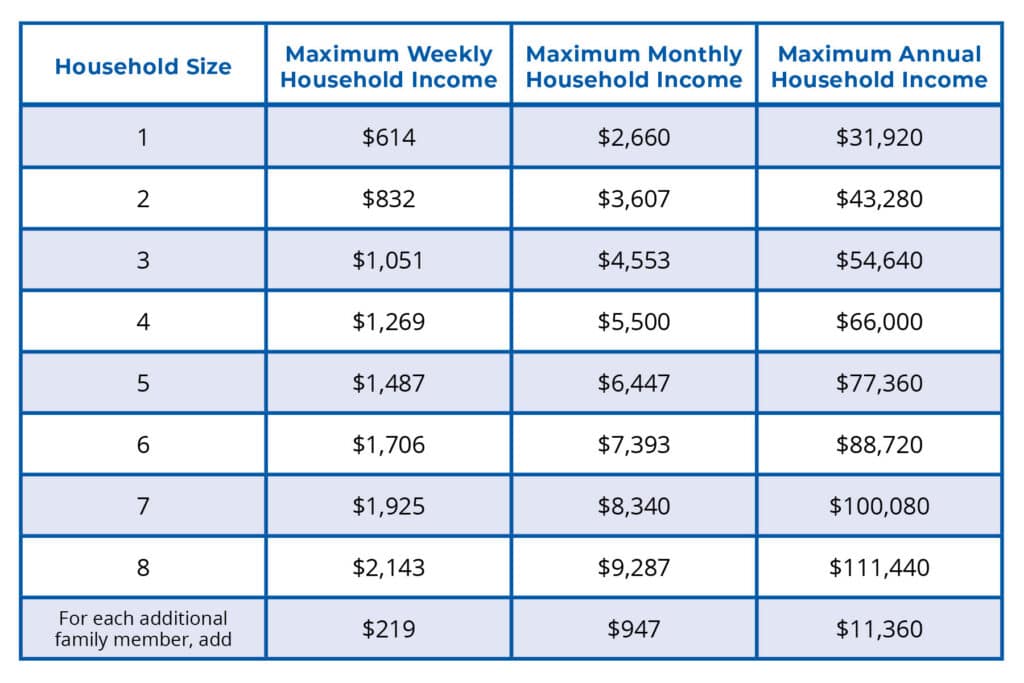
  1. If the household does not participate in any of the above public assistance programs, the household must have a combined gross income that does not exceed the maximum income limit for the applicable household size.

ADDITIONAL ELIGIBILITY GUIDELINES:
Please refer to the Interest Form for additional, program-specific criteria.

Eligibility and Income Guidelines

Anyone experiencing food insecurity and self-identifying as meeting the Income Guidelines below is eligible for IFCS Food Market services.

Income Guidelines:
As of March 1, 2025, a household may meet income-based standards in either of the following two ways:

  1. Participate in one of these public assistance programs:
    • Commodity Supplemental Food Program (CSFP)
    • Supplemental Nutrition Assistance Program (SNAP)
    • Low-income Energy Assistance Program (LEAP)
    • Temporary Assistance to Needy Families (TANF)
    • Old Age Pension (OAP)
    • Aid to Needy Disabled (AND)
    • Aid to the Blind (AB)
    • Supplemental Security Income (SSI)
    • Medicaid Eligible Foster Children
  1. If the household does not participate in any of the above public assistance programs, the household must meet the requirements based on the chart below, having a combined gross income not exceeding the maximum income limit for the applicable household size.

For IFCS Financial Assistance Programs (Rental and Utility Bill Payment Assistance) and seasonal Enrichment Programs, we have a service area covering:

  • Western Arapahoe County: Centennial, Englewood, Glendale, Greenwood Village, Littleton, Sheridan, and unincorporated Arapahoe County.
  • Southwest Denver Neighborhoods: Bear Valley, College View, Fort Logan, Harvey Park, Harvey Park South, Marston & South Platte (Southwest Neighborhoods further defined as being south of Jewell and west of Santa Fe).
  • Northern Douglas County: Highlands Ranch, Littleton, and Lone Tree.
  • Jefferson County: All addresses within the county will be considered.

 Applications outside of these listed areas will not be accepted. (Central Denver, North Denver, and Aurora applications will not be accepted.)