
IFCS | A Denver Area Food Bank and More to Nourish Lives

In-Kind Donations for IFCS: What to Know When Planning a Donation Drop Off

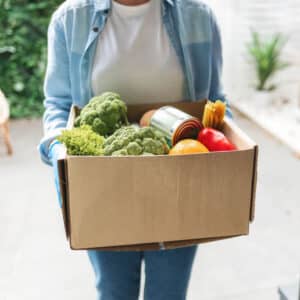
Woman carrying box of garden produce and canned good to donate.
Whether a box or a truckload, all donations help nourish lives!

Supporting neighbors in need can be as simple as donating a case of peanut butter, fresh vegetables from your garden, or hygiene products. If you have a knack for gathering people around a cause, you might consider leading a donation drive. At IFCS, in-kind donations from individuals, schools, businesses, faith communities, service and community groups, all help provide critical support to families facing hunger and hardship.

While monetary donations remain the most effective and flexible way to help IFCS respond quickly to community needs, donations of food, fresh produce, and hygiene items are other meaningful ways the community partners with IFCS to nourish lives, and they are crucial to our mission of showing caring for those most in need.


 What In-Kind Donations Does IFCS Accept?

IFCS welcomes donations of:

  • Shelf-stable food items – these are helpful to have on hand when our shelves of fresh produce, and fresh or frozen options are running low. Please check expiration dates prior to donation: IFCS does not distribute food with an expiration greater than 6 months.
  • Fresh garden produce – a wonderful way for local growers and home gardeners to share extra fruits and vegetables with neighbors in need, providing healthy and nutritious options that are often inaccessible due to their cost.
  • Diapers and hygiene products – these items are not covered by SNAP and are in high demand for families struggling to make ends meet.
  • Please DO NOT donate any unsealed or used products.
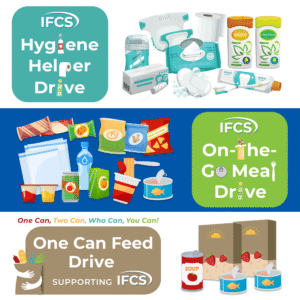
 

Host a drive for IFCS: hygiene helper, on-the-go meals, or bulk food Hosting a Food or Hygiene Drive

If you’re looking for a meaningful way to give back as a group, we encourage community members to organize donation drives through:

  • Neighborhoods
  • Companies and workplaces
  • Schools
  • Service organizations
  • Faith communities
  • Clubs and community groups

We’ve prepared kits to make it easy to coordinate a drive:

  • One Can Feed (Bulk) Food Drive: Organize a traditional food drive collecting larger quantities of shelf-stable food items for families in need.
  • On-the-Go Meal (Shelf-Stable, No-Cook) Food Drive: Help provide convenient, ready-to-eat meal items for individuals who may not have access to cooking facilities.
  • Hygiene Products Drive: Collect essential hygiene supplies that are often difficult for families to afford but are vital for everyday well-being.

Our blog entry, “A Taste of Hope from Bethany Lutheran Church,” highlights this faith community’s long-standing partnership with IFCS through volunteering, financial support, and food donations. Inspired by volunteering at The Market @ IFCS, church members helped organize a summer food drive that collected nearly 1,900 pounds of food, including cereal, peanut butter, jelly, and crackers. Community partnerships such as this help keep shelves stocked at the Market @ IFCS and show how together, we make a difference.
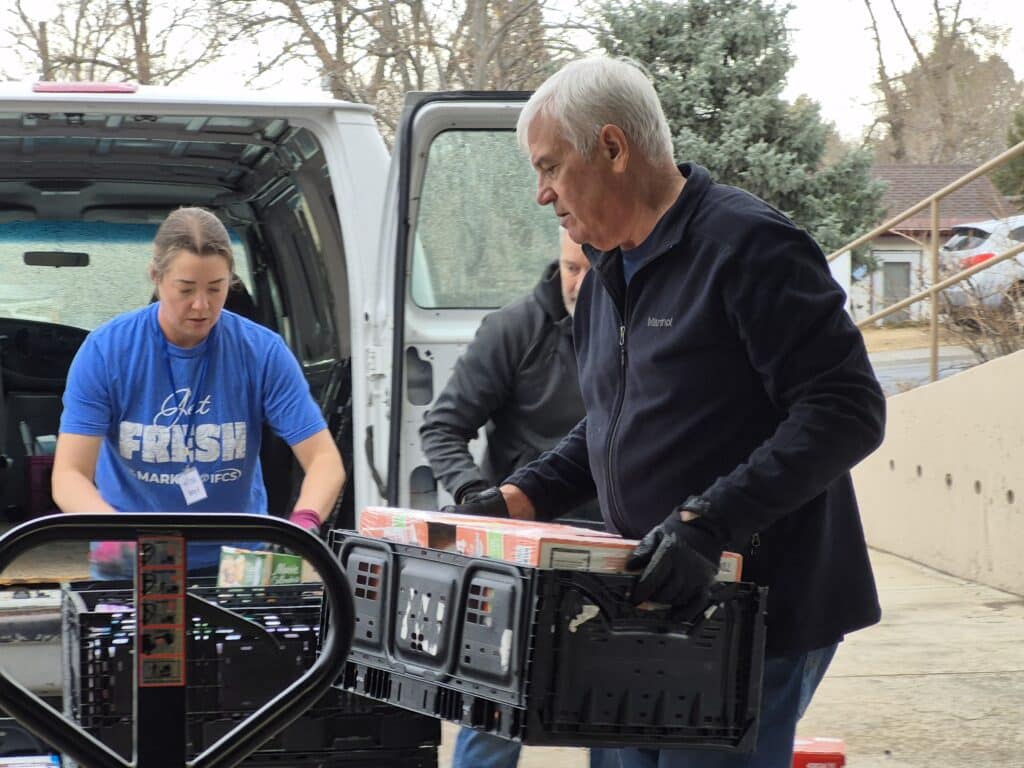
 

Volunteers help unload a donations made to IFCS
Volunteers unload a donation at IFCS.

Donation Drop-Off Hours

IFCS accepts donations during the week at the following times:

  • Monday, Tuesday, Thursday, and Friday
    • 8:30–11:00 a.m.
    • 1:00–2:30 p.m.

These donation windows allow staff and volunteers to safely receive, sort, and distribute items while continuing to serve participants throughout the day.


Weekend Donations by Appointment Only

IFCS may be able to accommodate weekend drop-offs for larger donations, but we ask that these be scheduled in advance.

Weekend appointments are typically reserved for substantial donations, such as:

  • Large community drives
  • Business donations
  • Multiple vehicle or truckload deliveries

For example, if your organization is delivering several truckloads of donated items, IFCS can work with you to coordinate a weekend drop-off.


Please Plan Ahead Before Dropping Off Large Donations

To help IFCS prepare for incoming donations and coordinate staffing or volunteer support, please contact us in advance, using our online Host a Drive form to help us prepare for your delivery.
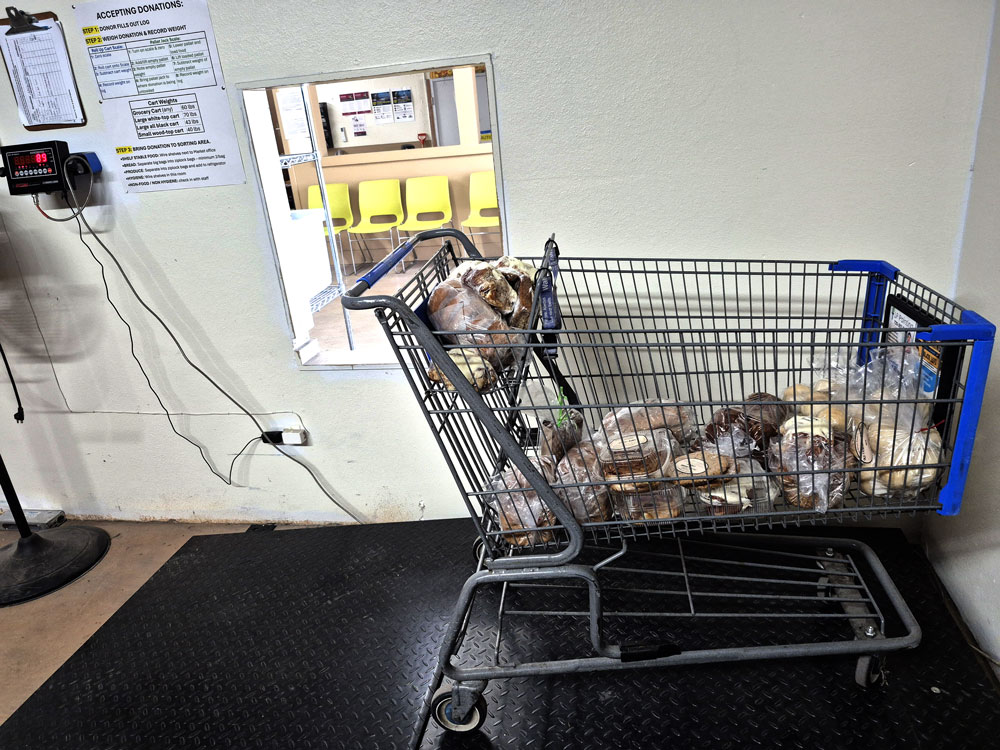
 

Cart of donated items being weighed on scale
A cart of donated items gets weighed on the scale and recorded.

What to Expect at Drop-Off

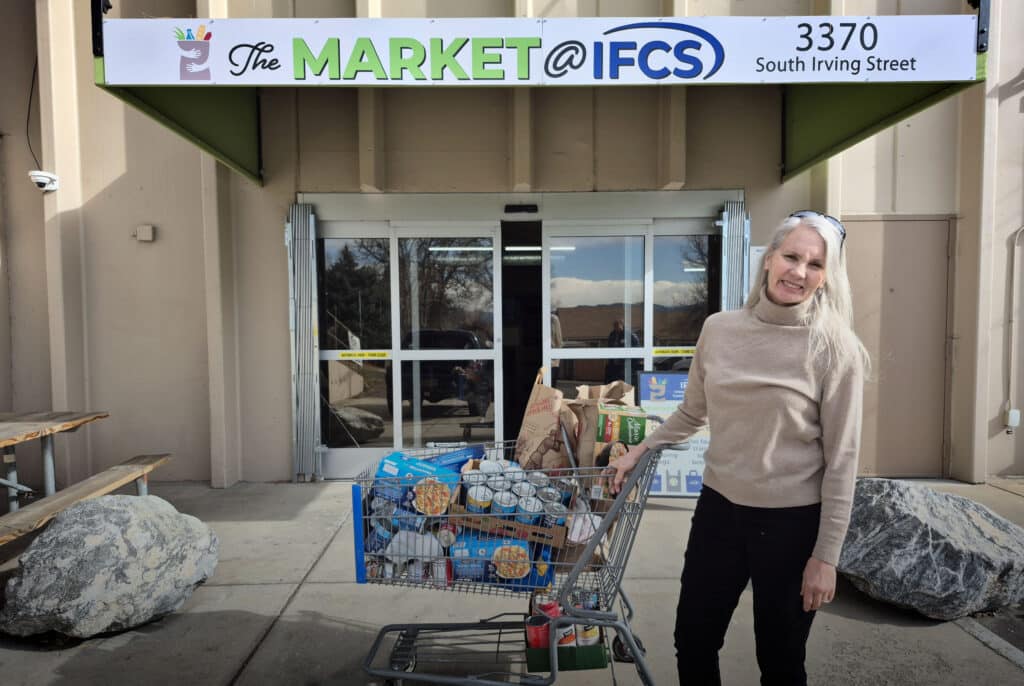
When you arrive at IFCS, bring your donation to the main Market entrance.

  • Ensure your donation is accepted by a volunteer or staff member. (Food left outside for an unknown amount of time will be disposed of for safety reasons. This allows us to avoid distributing food that may have frozen, overheated, or become infested.)
  • When you enter the Market, a volunteer will greet you and offer to help load your donation into a grocery cart. If it is a larger donation, we may fill a pallet.
  • You will be asked to fill out a log, recording your name, email (if a new donor), and what categories of items were donated.
  • The assisting volunteer will record the weight into the log and prepare your donation for sorting. This completed log allows us to track how many pounds of in-kind donations we receive, attributing each drop off to its respective donor.
  • The donation drop-off is smooth and efficient and usually takes under 15 minutes. Please allow more time for very large donations.


Amazon Purchases: Another Way to Fill Market Shelves

If you’d like to donate in a way that directly reaches the shoppers in our market, without requiring a drop-off, we created an Amazon wishlist. Purchase of these most-needed items plays a crucial role in keeping our shelves stocked with products that are in high demand. If you have an Amazon account, this is a great, stream-lined way to ship contributions directly to IFCS year-round.


Every Donation Helps

Whether you’re donating a box of canned goods or a truckload of fruit juice, fresh produce from your garden or three vans full of shelf-stable foods from a community drive, your support is a partnership with IFCS. Together, we are serving local households and helping build a stronger community.


To learn more about the community’s partnership with IFCS, WATCH THIS VIDEO.
Non-Discrimination Statement

In accordance with federal civil rights law and U.S. Department of Agriculture (USDA) civil rights regulations and policies, this institution is prohibited from discriminating on the basis of race, color, national origin, sex (including gender identity and sexual orientation), disability, age, or reprisal or  retaliation for prior civil rights activity.

Program information may be made available in languages other than English. Persons with disabilities who require alternative means of communication to obtain program information (e.g., Braille, large print, audiotape, American Sign Language), should contact the responsible state or local agency that administers the program or USDA’s TARGET Center at (202) 720-2600 (voice and TTY) or contact USDA through the Federal Relay Service at (800) 877-8339.

To file a program discrimination complaint, a Complainant should complete a Form AD-3027, USDA Program Discrimination Complaint Form which can be obtained online, from any USDA office, by calling (866) 632-9992, or by writing a letter addressed to USDA. The letter must contain the complainant’s name, address, telephone number, and a written description of the alleged discriminatory action in sufficient detail to inform the Assistant Secretary for Civil Rights (ASCR) about the nature and date of an alleged civil rights violation. The completed AD-3027 form or letter must be submitted to USDA by:

  1. Mail:
    U.S. Department of Agriculture
    Office of the Assistant Secretary for Civil Rights
    1400 Independence Avenue, SW
    Washington, D.C. 20250-9410; or
  2. Fax:
    (833) 256-1665 or (202) 690-7442; or 
  3. Email:
    program.intake@usda.gov

This institution is an equal opportunity provider.

This statement was updated 8.3.22 in accordance with USDA updates and guidelines.

Eligibility Guidelines

IFCS Enrichment Programs have service area and income guidelines.

SERVICE AREA GUIDELINES:
For IFCS Enrichment Programs, we have a service area covering:

  • Western Arapahoe County: Centennial, Englewood, Glendale, Greenwood Village, Littleton, Sheridan, and unincorporated Arapahoe County.
  • Southwest Denver Neighborhoods: Bear Valley, College View, Fort Logan, Harvey Park, Harvey Park South, Marston & South Platte (Southwest Neighborhoods further defined as being south of Jewell and west of Santa Fe).
  • Northern Douglas County: Highlands Ranch, Littleton, and Lone Tree.
  • Jefferson County: All addresses within the county will be considered.

Applications outside of these listed areas will not be accepted.


INCOME GUIDELINES:
As of March 1, 2026, a household may meet income-based standards in either of the following two ways:

  1. Participate in one of these public assistance programs:
    • Commodity Supplemental Food Program (CSFP)
    • Supplemental Nutrition Assistance Program (SNAP)
    • Low-income Energy Assistance Program (LEAP)
    • Temporary Assistance to Needy Families (TANF)
    • Old Age Pension (OAP)
    • Aid to Needy Disabled (AND)
    • Aid to the Blind (AB)
    • Supplemental Security Income (SSI)
    • Medicaid Eligible Foster Children
  1. If the household does not participate in any of the above public assistance programs, the household must have a combined gross income that does not exceed the maximum income limit for the applicable household size.

ADDITIONAL ELIGIBILITY GUIDELINES:
Please refer to the Interest Form for additional, program-specific criteria.

Eligibility and Income Guidelines

Anyone experiencing food insecurity and self-identifying as meeting the Income Guidelines below is eligible for IFCS Food Market services.

Income Guidelines:
As of March 1, 2026, a household may meet income-based standards in either of the following two ways:

  1. Participate in one of these public assistance programs:
    • Commodity Supplemental Food Program (CSFP)
    • Supplemental Nutrition Assistance Program (SNAP)
    • Low-income Energy Assistance Program (LEAP)
    • Temporary Assistance to Needy Families (TANF)
    • Old Age Pension (OAP)
    • Aid to Needy Disabled (AND)
    • Aid to the Blind (AB)
    • Supplemental Security Income (SSI)
    • Medicaid Eligible Foster Children
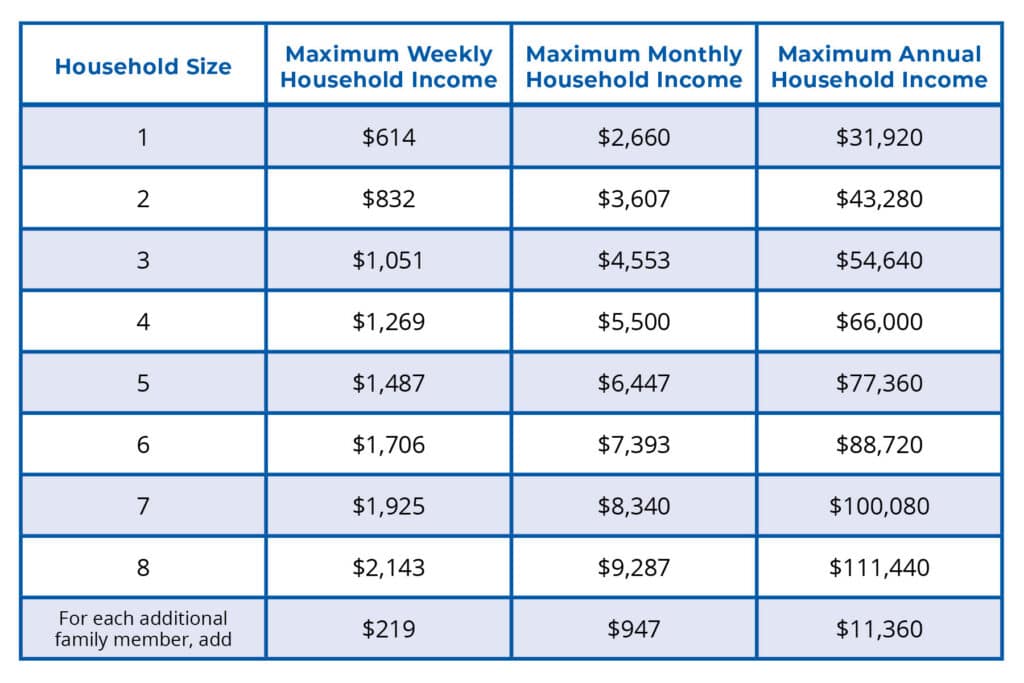
  1. If the household does not participate in any of the above public assistance programs, the household must meet the requirements based on the chart below, having a combined gross income not exceeding the maximum income limit for the applicable household size.

For IFCS Financial Assistance Programs (Rental and Utility Bill Payment Assistance) and seasonal Enrichment Programs, we have a service area covering:

  • Western Arapahoe County: Centennial, Englewood, Glendale, Greenwood Village, Littleton, Sheridan, and unincorporated Arapahoe County.
  • Southwest Denver Neighborhoods: Bear Valley, College View, Fort Logan, Harvey Park, Harvey Park South, Marston & South Platte (Southwest Neighborhoods further defined as being south of Jewell and west of Santa Fe).
  • Northern Douglas County: Highlands Ranch, Littleton, and Lone Tree.
  • Jefferson County: All addresses within the county will be considered.

 Applications outside of these listed areas will not be accepted. (Central Denver, North Denver, and Aurora applications will not be accepted.)