
IFCS | A Denver Area Food Bank and More to Nourish Lives

A Recipe for Stability: Energy Assistance That Helps Families Thrive

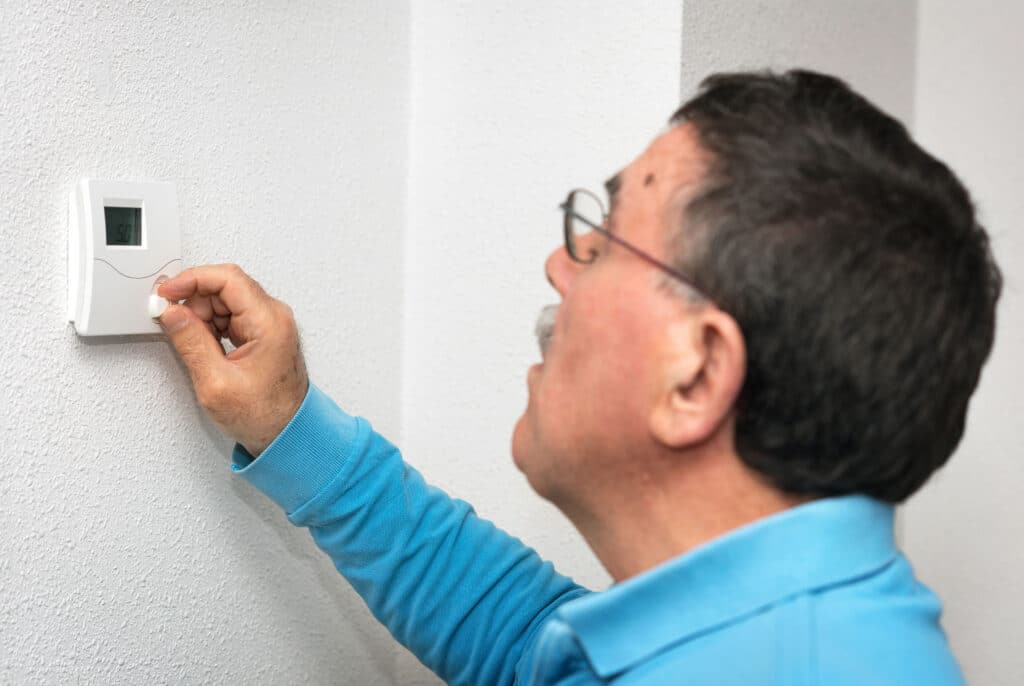
Energy Outreach Colorado LogoYear-round, Integrated Family Community Services (IFCS) partners with Energy Outreach Colorado (EOC) to support income-qualified Coloradans in paying past-due energy bills. In addition, EOC offers furnace repairs and energy-efficiency upgrades for homeowners and renters – a service IFCS does not assist with.


Energy is Essential

These services are important because high utility costs demand much of one’s resources. IFCS and EOC understand that covering one bill can make a big difference to a family. When families have affordable energy homes, children thrive, older adults age with dignity, and communities grow stronger.

Financial Assistance Manager, Kelly Vasquez, says, Families often share that they’re struggling to keep up with higher utility costs, especially during colder months. Many are balancing other essential expenses like rent, food, or medical bills, so the assistance helps them avoid falling behind on payments or facing shutoffs.”
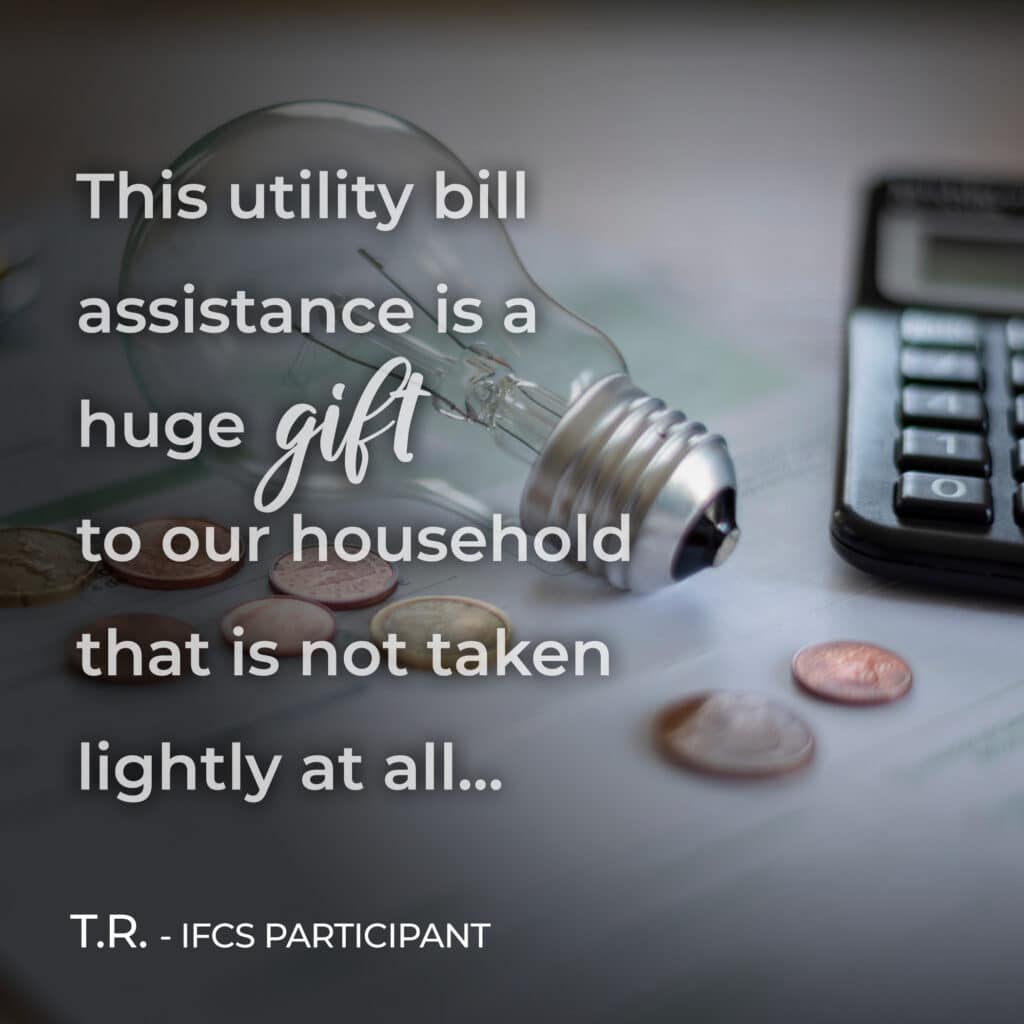
Quote from IFCS participant who received utility bill assistance: "This utility bill assistance is a huge gift to our household that is not taken lightly at all..."In the 2024-25 fiscal year (September 1, 2024 – August 31, 2025), IFCS provided 220 households (totaling 661 individuals affected) with utility assistance.

To learn more about IFCS’ Utility Bill Payment Assistance program and eligibility criteria, visit THIS WEBPAGE.


Making Access Available

Dealing with past due energy bills is very stressful. For those who qualify, EOC offers financial assistance to keep one’s home heated. This immediate help is very valuable.

A community member who benefitted from energy assistance shared: “It was a gigantic help for us, knowing it was getting taken care of. I feel more relaxed. Thank you for everything.”

For ongoing assistance, EOC helps repair and replace heating systems. Access to solar energy is also available through community solar panel gardens. Participation for this is available for both homeowners and apartment residents.

Since its founding in 1989 EOC has provided Colorado residents with over $410 million in benefits. During 2025, 40,789 households were served.
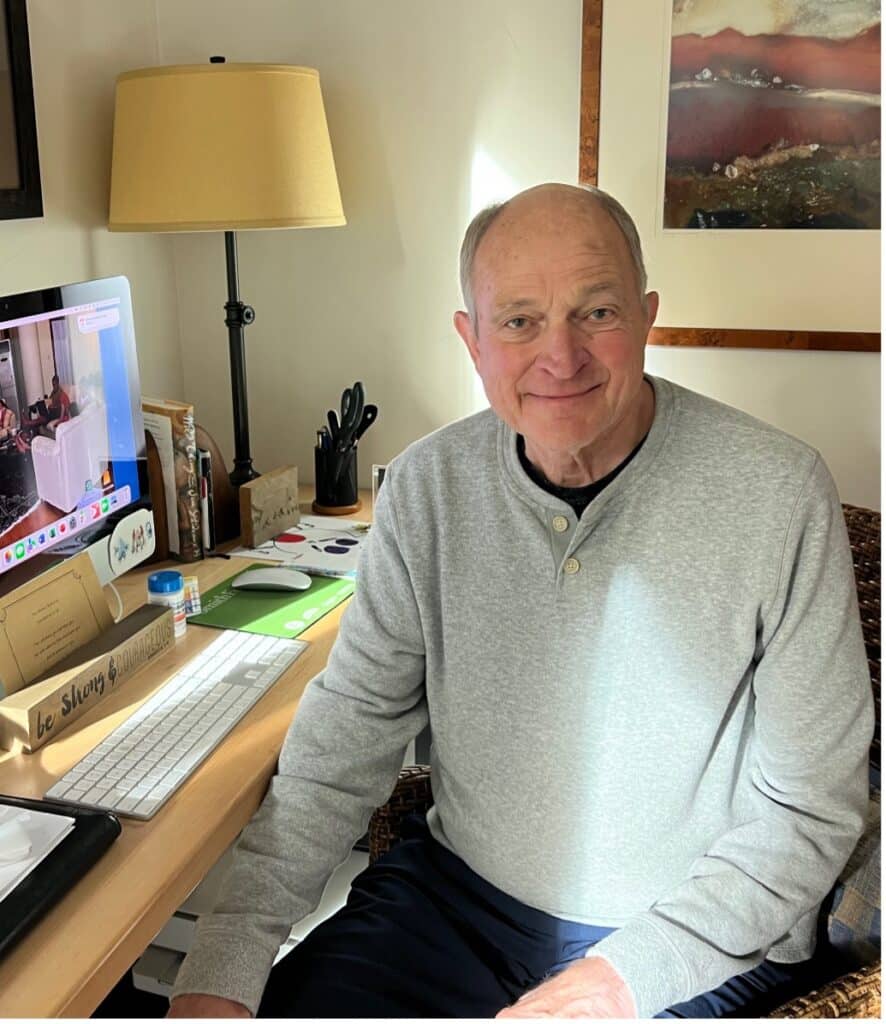


Steve Schmid began volunteering with IFCS after he and his wife moved to Englewood from Ohio in June, 2025.  He retired from a position which required him to analyze many projects, write reports and articles, and create engaging presentations. Now, he’s happy to contribute those skills in his Volunteer Core position at IFCS.

 Thank you Steve!
 

Non-Discrimination Statement

In accordance with federal civil rights law and U.S. Department of Agriculture (USDA) civil rights regulations and policies, this institution is prohibited from discriminating on the basis of race, color, national origin, sex (including gender identity and sexual orientation), disability, age, or reprisal or  retaliation for prior civil rights activity.

Program information may be made available in languages other than English. Persons with disabilities who require alternative means of communication to obtain program information (e.g., Braille, large print, audiotape, American Sign Language), should contact the responsible state or local agency that administers the program or USDA’s TARGET Center at (202) 720-2600 (voice and TTY) or contact USDA through the Federal Relay Service at (800) 877-8339.

To file a program discrimination complaint, a Complainant should complete a Form AD-3027, USDA Program Discrimination Complaint Form which can be obtained online, from any USDA office, by calling (866) 632-9992, or by writing a letter addressed to USDA. The letter must contain the complainant’s name, address, telephone number, and a written description of the alleged discriminatory action in sufficient detail to inform the Assistant Secretary for Civil Rights (ASCR) about the nature and date of an alleged civil rights violation. The completed AD-3027 form or letter must be submitted to USDA by:

  1. Mail:
    U.S. Department of Agriculture
    Office of the Assistant Secretary for Civil Rights
    1400 Independence Avenue, SW
    Washington, D.C. 20250-9410; or
  2. Fax:
    (833) 256-1665 or (202) 690-7442; or 
  3. Email:
    program.intake@usda.gov

This institution is an equal opportunity provider.

This statement was updated 8.3.22 in accordance with USDA updates and guidelines.

Eligibility Guidelines

IFCS Enrichment Programs have service area and income guidelines.

SERVICE AREA GUIDELINES:
For IFCS Enrichment Programs, we have a service area covering:

  • Western Arapahoe County: Centennial, Englewood, Glendale, Greenwood Village, Littleton, Sheridan, and unincorporated Arapahoe County.
  • Southwest Denver Neighborhoods: Bear Valley, College View, Fort Logan, Harvey Park, Harvey Park South, Marston & South Platte (Southwest Neighborhoods further defined as being south of Jewell and west of Santa Fe).
  • Northern Douglas County: Highlands Ranch, Littleton, and Lone Tree.
  • Jefferson County: All addresses within the county will be considered.

Applications outside of these listed areas will not be accepted.


INCOME GUIDELINES:
As of March 1, 2026, a household may meet income-based standards in either of the following two ways:

  1. Participate in one of these public assistance programs:
    • Commodity Supplemental Food Program (CSFP)
    • Supplemental Nutrition Assistance Program (SNAP)
    • Low-income Energy Assistance Program (LEAP)
    • Temporary Assistance to Needy Families (TANF)
    • Old Age Pension (OAP)
    • Aid to Needy Disabled (AND)
    • Aid to the Blind (AB)
    • Supplemental Security Income (SSI)
    • Medicaid Eligible Foster Children
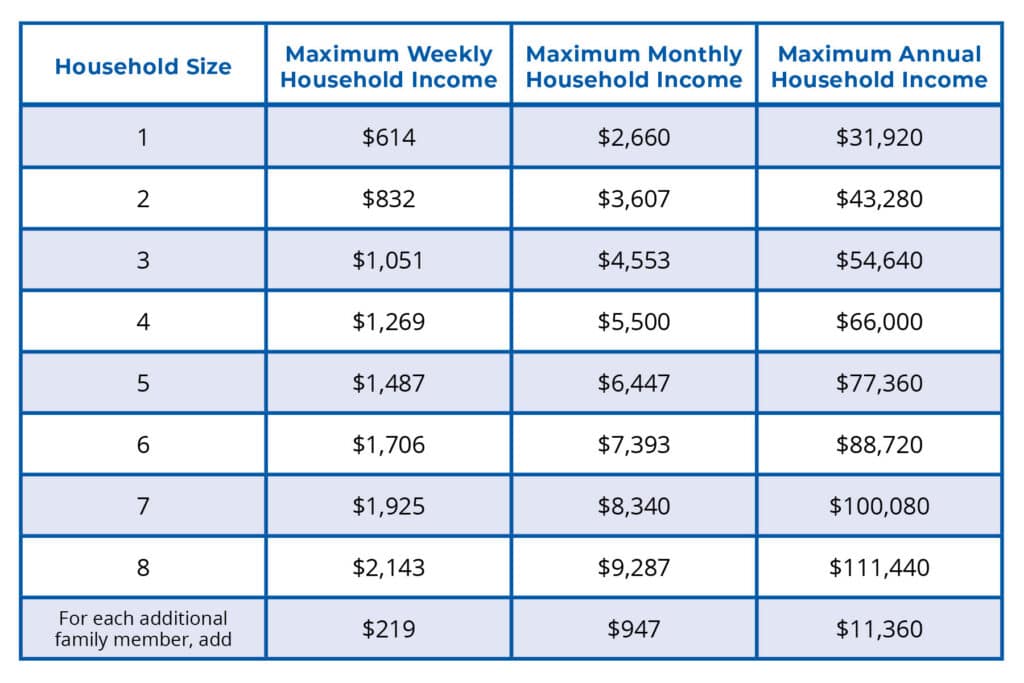
  1. If the household does not participate in any of the above public assistance programs, the household must have a combined gross income that does not exceed the maximum income limit for the applicable household size.

ADDITIONAL ELIGIBILITY GUIDELINES:
Please refer to the Interest Form for additional, program-specific criteria.

Eligibility and Income Guidelines

Anyone experiencing food insecurity and self-identifying as meeting the Income Guidelines below is eligible for IFCS Food Market services.

Income Guidelines:
As of March 1, 2026, a household may meet income-based standards in either of the following two ways:

  1. Participate in one of these public assistance programs:
    • Commodity Supplemental Food Program (CSFP)
    • Supplemental Nutrition Assistance Program (SNAP)
    • Low-income Energy Assistance Program (LEAP)
    • Temporary Assistance to Needy Families (TANF)
    • Old Age Pension (OAP)
    • Aid to Needy Disabled (AND)
    • Aid to the Blind (AB)
    • Supplemental Security Income (SSI)
    • Medicaid Eligible Foster Children
  1. If the household does not participate in any of the above public assistance programs, the household must meet the requirements based on the chart below, having a combined gross income not exceeding the maximum income limit for the applicable household size.

For IFCS Financial Assistance Programs (Rental and Utility Bill Payment Assistance) and seasonal Enrichment Programs, we have a service area covering:

  • Western Arapahoe County: Centennial, Englewood, Glendale, Greenwood Village, Littleton, Sheridan, and unincorporated Arapahoe County.
  • Southwest Denver Neighborhoods: Bear Valley, College View, Fort Logan, Harvey Park, Harvey Park South, Marston & South Platte (Southwest Neighborhoods further defined as being south of Jewell and west of Santa Fe).
  • Northern Douglas County: Highlands Ranch, Littleton, and Lone Tree.
  • Jefferson County: All addresses within the county will be considered.

 Applications outside of these listed areas will not be accepted. (Central Denver, North Denver, and Aurora applications will not be accepted.)