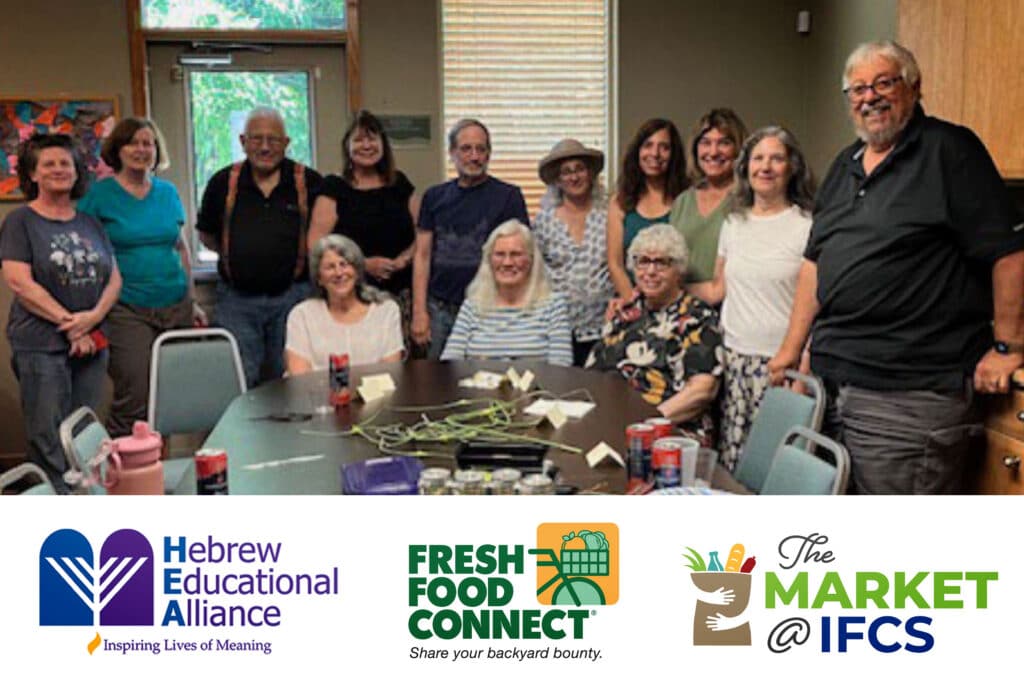
The Hebrew Educational Alliance (HEA), founded in 1928, envisions a community “dedicated to fostering connected and engaged individuals who are committed to bettering themselves and the larger community through Jewish values.” Building a culture of volunteerism is one way they are bringing that vision to life, and their Tikkun Olam committee (“Tikkun Olam” means “repairing the world” in Hebrew) has expanded their multi-year partnership with IFCS to make it happen! The HEA donation garden is in its fourth year of growing hundreds of pounds of fresh produce for IFCS and has now taken on monthly projects.
Tikkun Olam Committee
“This year, we are proud to be able to partner with IFCS and to bring our 750-family congregation to the work of providing all community members with food and supplies to help everyone thrive, and our members are responding,” says Sherri Kadovitz, longtime member of HEA and co-chair of the Tikkun Olam committee. Sherri and co-chair Nevan Mandel are pulling together volunteers for projects all year long, including:
- Food Drives – shelf-stable goods continue to fill the barrels in the building lobby
- Children’s Book Collections – end-of-school-year book donations from our school and from families
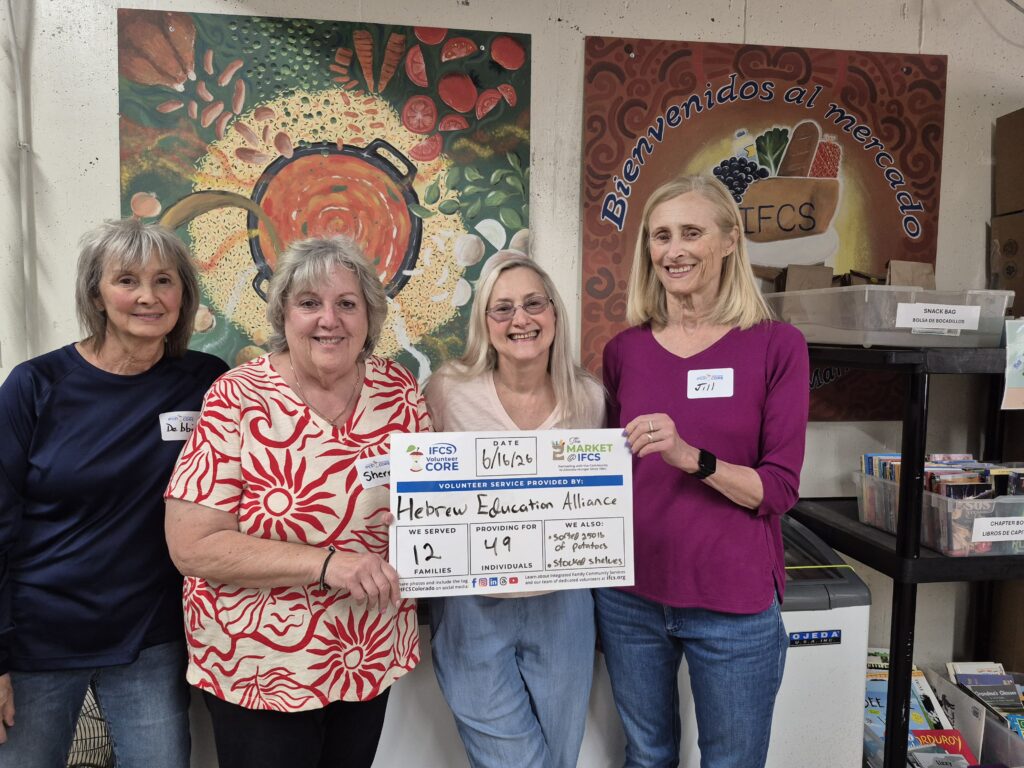
- Monthly Food Pantry Volunteering – plus encouraging individual members to volunteer on their own
- Healthy Snack Kits and Hygiene Kits – members fill bags for IFCS distribution several times a year
Forming a Partnership with IFCS
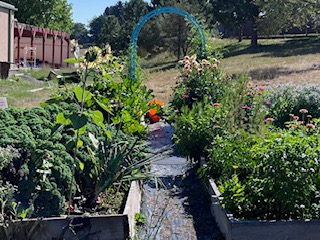
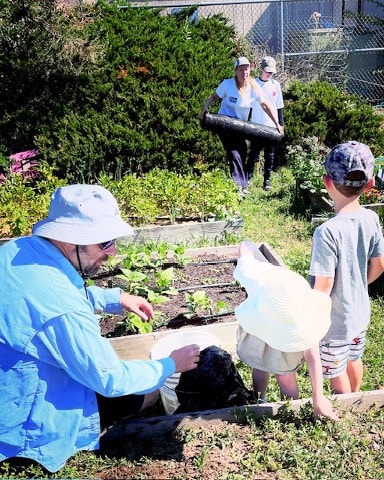
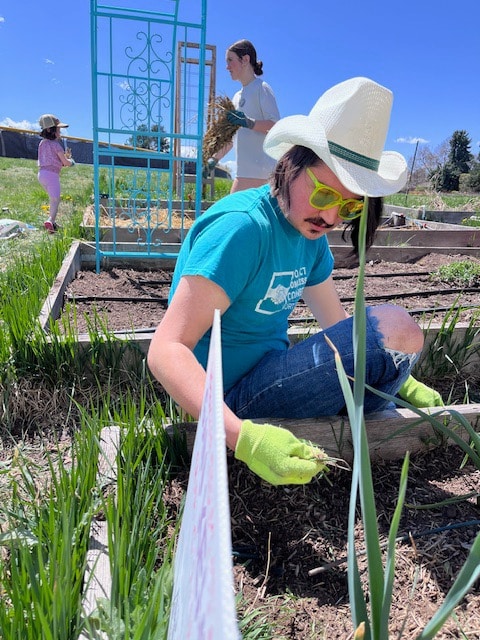
HEA began working with IFCS four years ago, when a few active gardeners came together to rebuild a 16-raised-bed community garden. They partnered with Fresh Food Connect – who put HEA in touch with IFCS. Several hundred pounds of fresh, pesticide-free produce is grown every year.
The garden is used as an educational space for the community school, and additionally provides children and their families with outdoor learning experiences that connect them to the Jewish values of taking care of the earth, and each other. “Creating a sustainable way of living and respecting the earth is a very important part of Judaism, and we strive for that,” says Nevan, who as a young adult has worked on environmental and social justice issues. He’s bringing the next generation of HEA members into opportunities for community action.
Connecting People to Traditions, to Justice, to Community
“The Bible is a record of an agriculturally based people,” says Sue Salinger, garden coordinator. “We have a clear direction on how to create a just society where everyone has what they need and the community takes care of itself. When you get a group of people outdoors, those Jewish traditions come to life.”
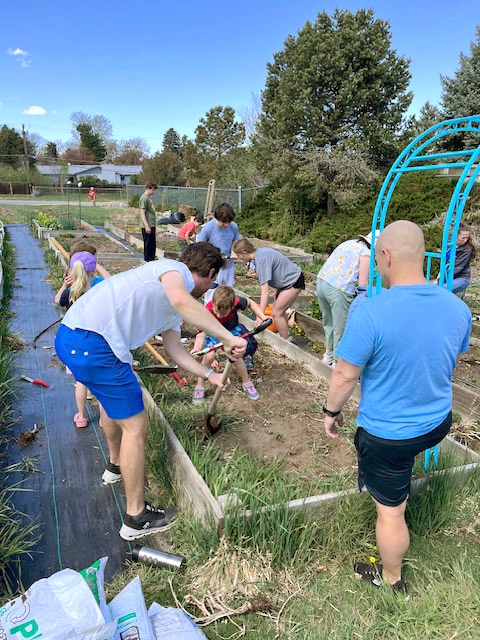
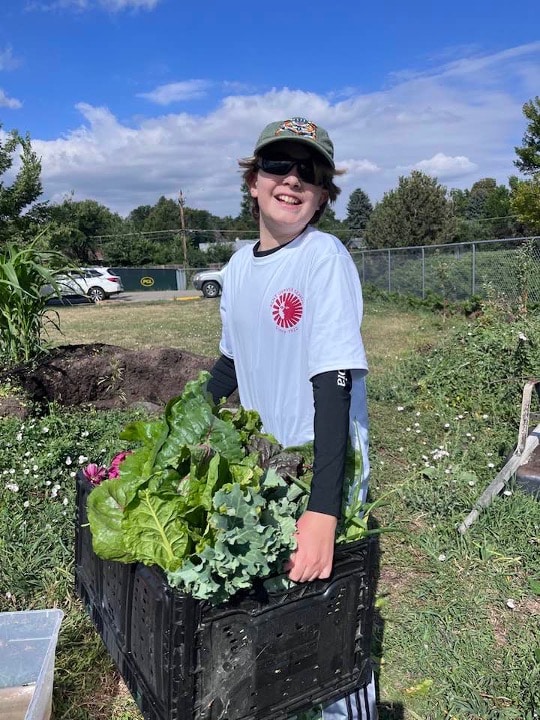
The garden connects tradition and contemporary food-related issues impacting the Greater Denver community. In the Jewish biblical tradition, the annual holiday cycle is largely based on the ancient agricultural calendar. Shavuot, in late spring, originally marked the wheat harvest. Sukkot, in the fall, celebrated the fruit harvest. And Passover, in the early spring, when Jewish people world-wide hold dinners to tell the story of leaving slavery and becoming free, centered around barley harvests (the first grain to be domesticated).
“During the Passover story, there is a moment where we are invited to open our doors and shout out into the public streets ‘Let all who are hungry come and eat!’” Sue explains. “A cornerstone of our tradition is to provide food for the hungry, and to be sure our neighbors have what they need. Partnering with IFCS brings these cultural values to life. This partnership connects people to traditions, to justice, to our community today. People are able to discover a way to engage with tradition that they can’t always find within the walls of a building.”
 Sue Salinger works for change at the intersection of the environment, food systems, and spirituality.
Thank you Sue, for providing this guest blog post, and thanks to the Hebrew Educational Alliance for your partnership with IFCS to alleviate hunger.
If you’d like to learn more about HEA’s Community Garden, or join their gardening team, visit THIS WEBSITE and contact Sue with any questions.
To learn more about Fresh Food Connect and how they’re bringing community gardeners into partnership with hunger alleviation organizations, visit THIS WEBPAGE.