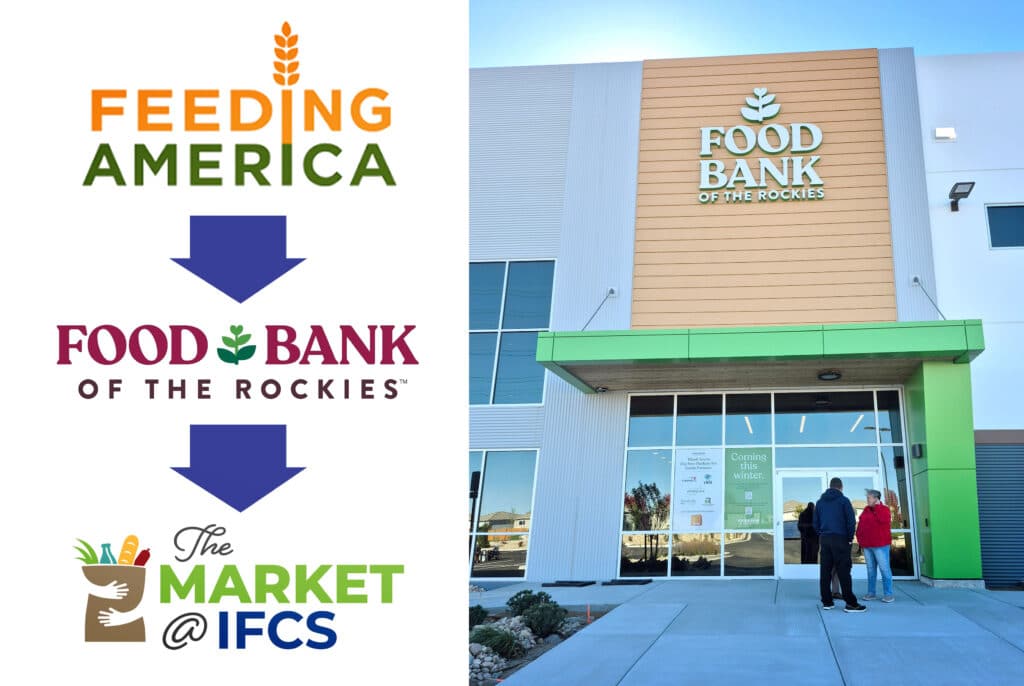
As you well know, hunger in America is a crisis. If you’ve ever wondered how our country’s massive food assistance program works across the nation to support households experiencing hunger, you are in for a treat! This blog entry highlights Food Bank of the Rockies, a food bank that allows IFCS to maximize donations and stock the Market shelves with the foods our participants request most.
What is the difference between a food bank and a food pantry?
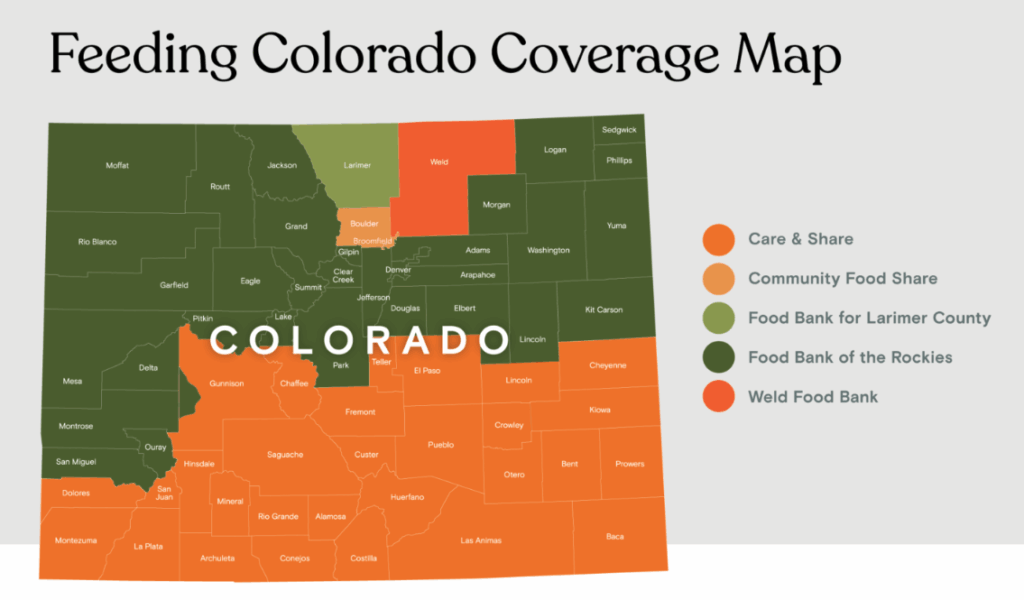
Before some of its food ever reaches IFCS, an entire network of organizations works behind the scenes to make our deliveries possible. Feeding America is a national network that consists of more than 200 partner food banks, all working together to ensure that every county across our country is being served. Food Bank of the Rockies is part of this national network, collaborating with four other food banks on the state level. Together, the five food banks cover most of northern Colorado and the entire state of Wyoming, collectively supporting more than 1,300 nonprofit agencies. The food banks provide a good portion of the food that is distributed at food pantries – including the Market @ IFCS, as well as community centers, soup kitchens, shelters, schools, and churches.
As a food bank, Food Bank of the Rockies partners with farmers, manufacturers, retailers, and distributors to receive and purchase millions of pounds of food at costs that are 50-77% lower than what the average consumer purchases in a grocery store. Their partnerships allow them to purchase bulk food as well as rescue perfectly good surplus food destined for the landfill. On a daily basis, the Food Bank distributes enough food to provide 195,000 meals across Colorado and Wyoming. As a central hub for our nonprofit, Food Bank of the Rockies is the primary source used by the IFCS program team to order large quantities of the items our participants most request.
A New Building to Respond to Rising Needs
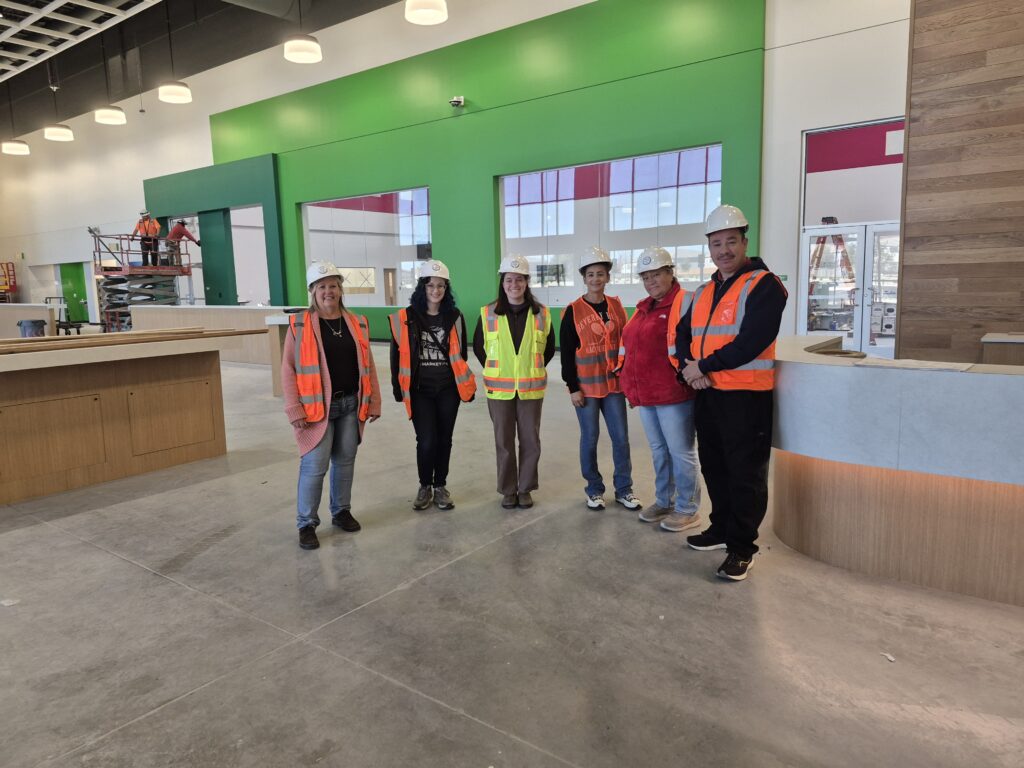
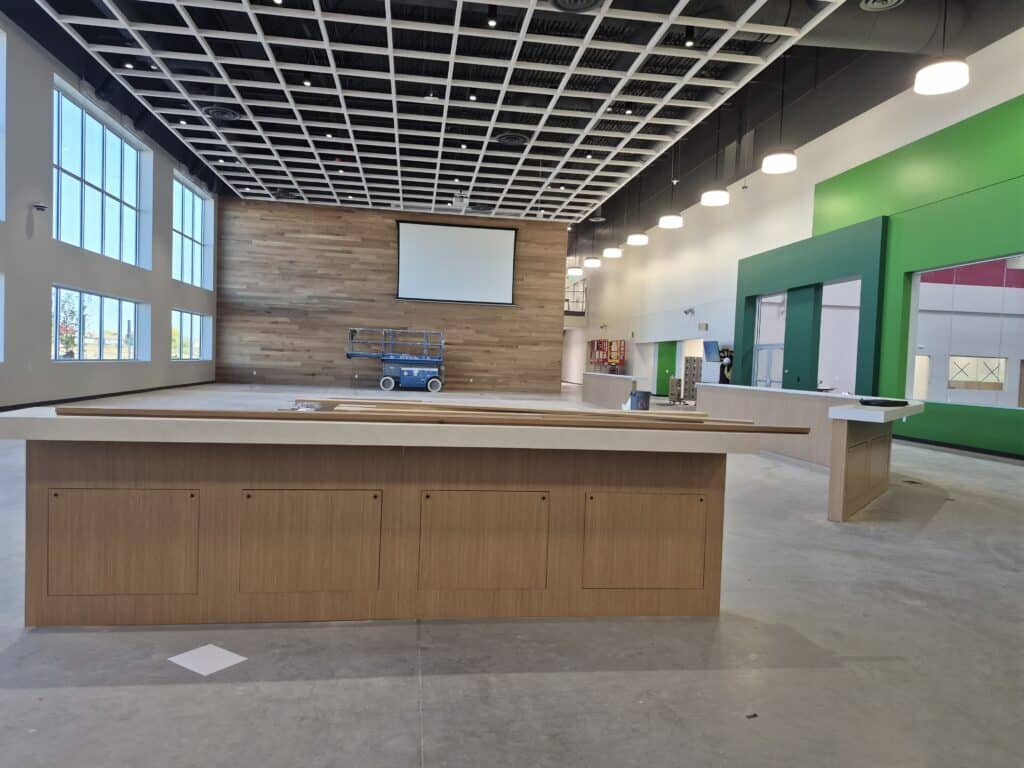
Food Bank of the Rockies has officially outgrown two warehouses currently in use, and is building a new distribution center—an expansive, innovative facility (pictured at the top of this blog entry) that is set to open this winter. In October, several IFCS team members toured the new facility and learned that it will:
- Double cold storage for fresh and frozen items
- Triple volunteer capacity
- Quadruple kitchen space
- Scale up to producing four times as many kids’ meals and gradually offer up to 50% more fresh produce
- Increase food storage capacity by 67%
- Enable distribution of up to 300% more culturally responsive food
- Reduce operating costs by more than $500,000 annually by consolidating Denver-area operations under one roof and investing in sustainability
These improvements will allow Food Bank of the Rockies to scale up to 100 million pounds of food distributed every year.
The People Behind the Numbers
Keiren Brown, Food Bank of the Rockies Community Connection Lead, personally experienced food insecurity before joining the hunger relief field, and he shares, “I know what it’s like to be in need, and it’s not fun… before I worked at Food Bank of the Rockies, I didn’t know that these resources existed and that I could access them.” This lived experience shapes Keiren’s work now, which involves fostering relationships among all the hunger relief partners: his goal is food justice, searching for solutions to hunger, and finding best ways to support Food Bank of the Rockies’ Hunger Relief Partners so they are equipped to serve neighbors in need. In his role, Keiren focuses on collaboration with Hunger Relief Partners across northern Colorado .
Although it’s discouraging to see the demand for food assistance rising, Food Bank of the Rockies’ expansion is a hopeful development that will allow them to source and distribute much more food, better meet public need, and relieve pressures on hunger-relief partners—like IFCS—that often face limited inventory when placing their orders. With more capacity, the Food Bank will be able to provide a wider variety and greater quantity of food, helping partners serve the community more consistently. Keiren hopes that someday the need for food assistance will decrease, but for now, the new building is essential to keep up with growing demand. He says, “I would rather retire here from Food Bank of the Rockies knowing that we did a job well done… All the food pantries could actually shut down, because we solved the problem of hunger. That might be a little idealistic for me to say, but it is possible. It’s just getting there that is the challenge.”
Joanna Wise, Food Bank of the Rockies Press Relations Manager, has been working in food banks for over six years. She points out that the recent government shutdown has highlighted how food banks and pantries have become the “safety net for the safety net,” as more people rely directly on charitable food organizations rather than solely on federal programs like SNAP benefits. The Food Bank’s new building will help better address this growing need by increasing access to fresh and nutritious foods, and creating a more inspiring, functional hub for Hunger Relief Partners. With more space for rescued food and healthier options, Food Bank of the Rockies hopes to give neighbors more access to the same quality of groceries they’d find at a store—especially items like produce, dairy, and proteins that families often have to forego due to their higher cost. She’s excited about the many new opportunities the facility will bring for both partners and the communities they serve. She says, “It’s not only about increasing the amount of meals we’ll be able to provide, but how we do it as well—delivering on our mission of really prioritizing the preferences of our community as well as the unique needs, and doing so with dignity and respect.”
How Food Bank of the Rockies Supports IFCS Every Day

It is well known that IFCS provides food for individuals and families in the Denver metro area, but many don’t realize that Food Bank of the Rockies is the primary source of the food we distribute.
- IFCS picks up from Food Bank of the Rockies three or more times each month.
- We receive purchased food, rescued food, and TEFAP products—the variety of nutritious, high-quality USDA Foods that are made available through The Emergency Food Assistance Program (TEFAP) for low income households.
- Food Bank of the Rockies offers food safety guidelines, data privacy standards, and compliance support.
- IFCS uses a database called Link2Feed, provided by Food Bank of the Rockies, to track all food and client services.
For an organization like IFCS—serving neighbors directly—Food Bank of the Rockies is the hub that keeps our pantry shelves full, safe, and consistent.
Fresh Thanks: Annual Distribution
Each November, IFCS provides holiday groceries to upwards of 500 families through the Fresh Thanks seasonal enrichment program. On Saturday, November 22, 2025, hundreds of volunteers will arrive at Arapahoe Community College for a day of giving; they’ll assemble and distribute hundreds of seasonal grocery boxes for our neighbors in need. This is a much beloved event that gathers the community in a great show of compassion and support. What’s less visible is how much of this event depends on Food Bank of the Rockies.
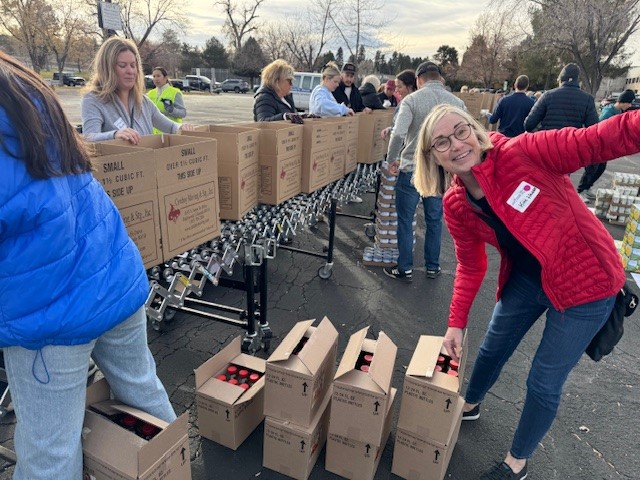
Here’s how it works behind the scenes:
- September: IFCS submits a wish list of food items we’re looking for, and quantities, and Food Bank of the Rockies responds with what they’ll be able to provide, and pricing. Once the list is finalized, the Food Bank creates an agency order for IFCS.
- The dry items are usually already available at the Food Bank’s distribution center but produce requires a special order. To guarantee our requests in such large quantities, Food Bank of the Rockies places a special order from a produce distributor. Produce pricing varies weekly based on supply, so they give us estimated pricing for the initial quote, then the final pricing once we’ve placed the order (about 10 days before the event).
- A day or two before the Fresh Thanks event, Food Bank of the Rockies volunteers assemble the order and prepare for bulk delivery.
- Delivery is arranged for Arapahoe Community College at 7:00 am on distribution day.
- Then, IFCS volunteers unpack the bulk order and assemble the 500 boxes for individual distribution, one per household.
Joanna explains how powerful it is to witness this collaboration between Food Bank of the Rockies and IFCS: “Food is nourishment for your body, but also for your soul… Families tell us how much these meals mean as they create memories around the table. That’s what it’s all about.” And Keiren shares what he has heard directly from neighbors: “You guys do so much for the community… IFCS is a safe place. Families tell us they love IFCS because they can come for food, but also for so much more.”
Together Toward a Hunger-Free Future
Food Bank of the Rockies and IFCS share the same vision: a community where every neighbor has the food they need, distributed with dignity, respect, and care. As we look ahead to Fresh Thanks and the opening of Food Bank of the Rockies’ new facility, we are deeply grateful for our partnership—for the food that is distributed through our network of partnership, and also for the compassion and commitment behind it.
“I would like to express Food Bank of the Rockies’ gratitude for our partnership with IFCS. Not only year round, but as we’re going into the holiday season, just thinking about the importance of this partnership,” says Joanna. “I think it’s extremely special for us to be able to show up for our community together.”
At IFCS, we are honored to serve alongside Food Bank of the Rockies as we work toward the possibility of ending food insecurity—one family, one meal, one partnership at a time.
Learn more about how the community keeps shelves stocked at the Market @ IFCS in our blog post, The Journey of a Meal: Where Does IFCS’ Food Come From?
To contribute to IFCS’ Fresh Thanks event, DONATE HERE.