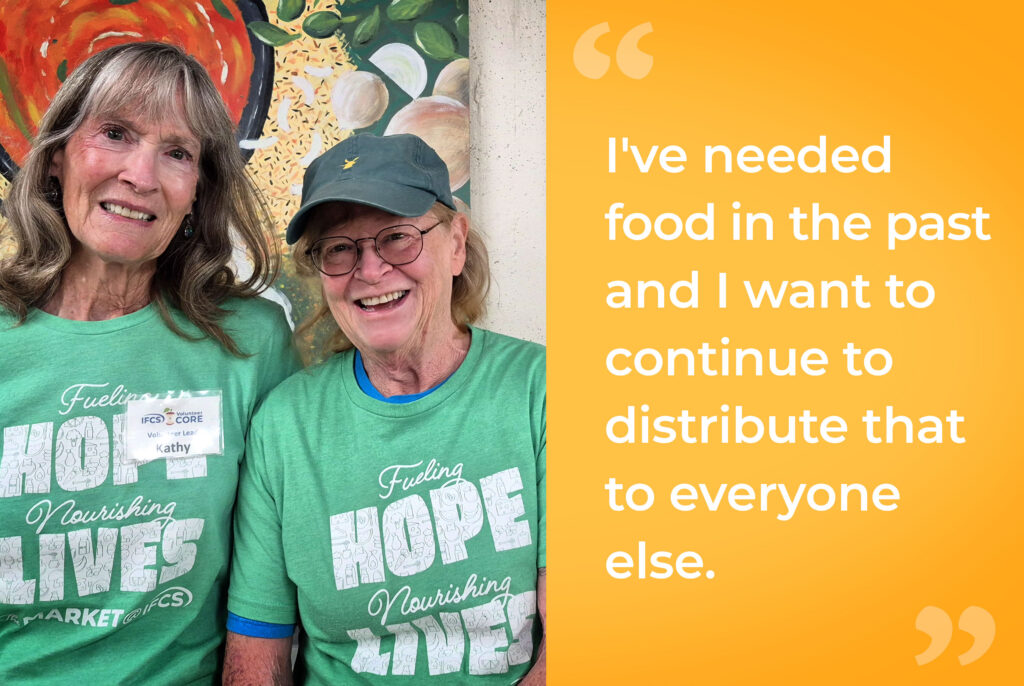
In October of 2019, Peggy Burtis retired from a job she held for 29 years. Just as she was looking forward to investing some time into volunteer opportunities, the COVID pandemic turned the world upside down. “So, I just did puzzles for a year,” she says, “I hardly left the house.” Her wheels were turning in the solitude, though, and Peggy got to thinking about the ‘buy what you know’ investing approach. She recalled hearing about this concept as a wise investment strategy and describes it as “buying stock in something you use, because everybody else is probably using it, too.” She identified food as a primary priority, a clear motive rooted in her history as a single mother. “I’ve needed food in the past,” she recalls, “and I want to continue to distribute that to everyone else. Anyone that can come.” In that moment, Peggy decided that the best investment of her time and energy as a volunteer would be helping others access the food they needed.
Creating a Life, Building a Career
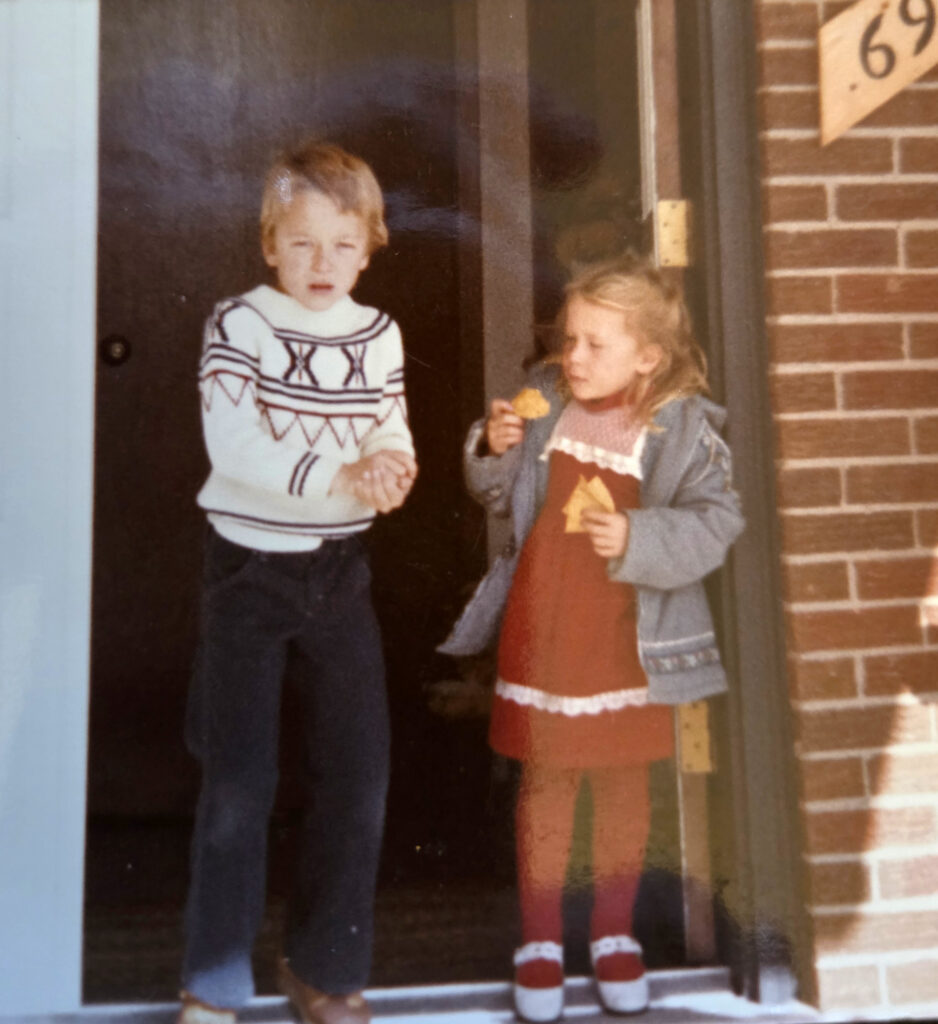
As a young woman living in Wyoming, Peggy passed up a university scholarship when she married. She had two children – a 2-year-old son, and a daughter she had just given birth to – when divorce made her a single mom. It was summer’s end, and having minimal prior work experience, she decided to enroll in college: amidst a flurry of life transitions, Peggy landed in university classes the following week. “The resources back then for lots of things were different,” she explains. “Daycare was paid for. I got the AFDC (Aid to Families with Dependent Children), which is now TANF (Temporary Assistance for Needy Families), and I got food stamps, and things were just, as far as resources, a lot better back then.” After several years of juggling housing needs and moves, childcare arrangements, and all the responsibilities of a parent and a student, Peggy graduated from the very university for which she had originally earned a scholarship.
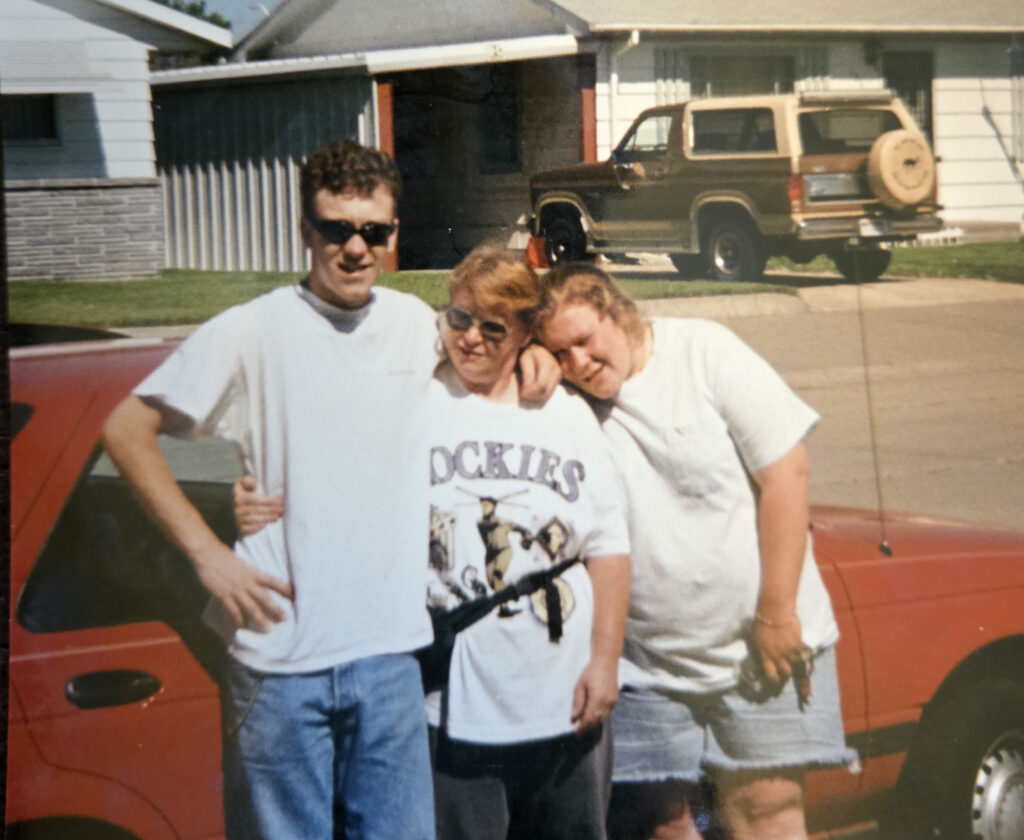
Peggy worked as a teacher for five years. Then, in the late 1980s, teaching opportunities became more scarce in Wyoming, and she wasn’t interested in moving to Texas where teachers were being actively recruited. “So I ended up in Denver,” she says, “My sister lived here and we stayed with her for quite some time.” Peggy worked several odd jobs, from painting houses to helping conduct summer youth programs. Food assistance helped her family get by.
Eventually, she moved to Littleton and, when a friend referred her to a company in her own neighborhood, Peggy landed her next work adventure: a pneumatics factory that would take her to retirement. “I started in the assembly department, and I made more than the minimum wage,” she says, “but I still qualified for food stamps, and … when needed, I’d go to food banks… IFCS was one of [the providers], back then called Interfaith,” she explains. She also believes that she received help with her electric bill from IFCS.
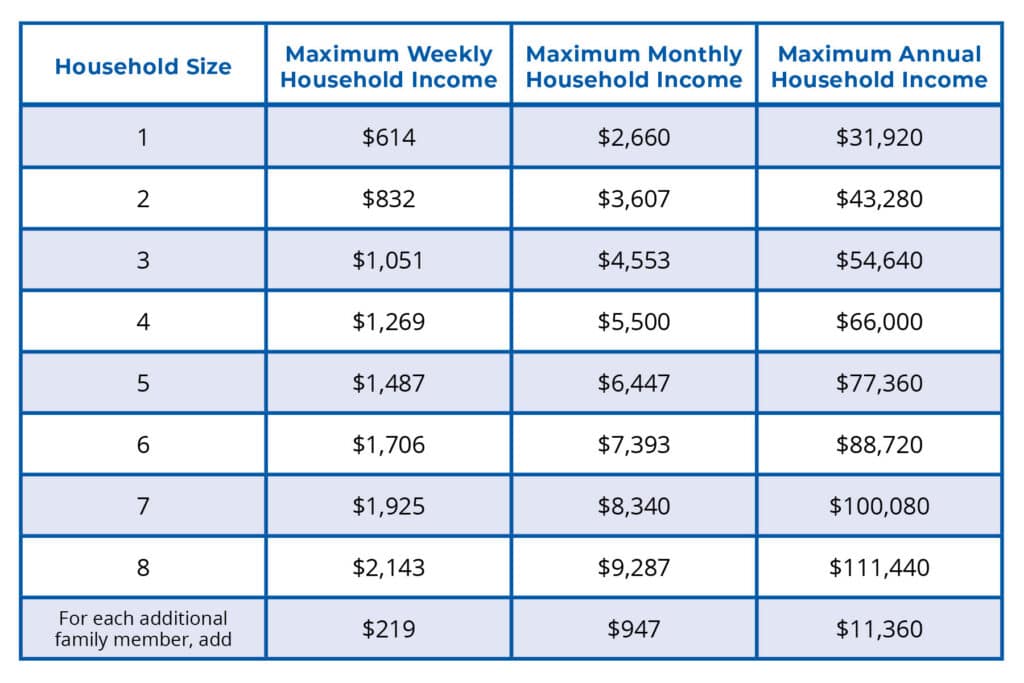
Thanks to her education, Peggy was asked to take new roles at the factory and in time, moved up to a position that provided a living wage. It wasn’t an easy job, or always enjoyable, but the longer she worked at the company, the more vacation time and higher wages she earned. The steadiness provided stability, and Peggy was able to purchase a condo and pay off her vehicle, helping set her up for retirement after 29 years with the company. She continues to live frugally and, on occasion, visits the Market @ IFCS as a shopper herself, to supplement her retirement income.
Starting to Volunteer
Once COVID isolation had passed, Peggy searched online for ‘foodbanks near me’ and arrived at the IFCS website. She determined: “That’s where I have to go, because they helped me before.” She signed up to volunteer and became even more dedicated to her volunteer shift than she was to her job. “I go every Thursday, and if I miss a Thursday… I try to pick up a shift during the week,” she says. “You know, I figure if somebody helped me, I will help them back.”
Volunteering is a good break from everyday life; she loves the people she works with and is completely present to those who visit IFCS for food assistance. “I tell people as I’m walking them around the market: ‘This is the day I don’t worry about anything on the outside. I don’t worry about what my grandson’s doing, or somebody else is doing, or who’s sick, or what’s going on, or how many appointments I have,’” she explains. “This is my day to talk with them, and to help them get groceries.” Peggy especially enjoys working beside Kathy, another IFCS volunteer, at the Market check-in station and catching up with repeat shoppers who make their monthly visit on a Thursday.
Investing in Community
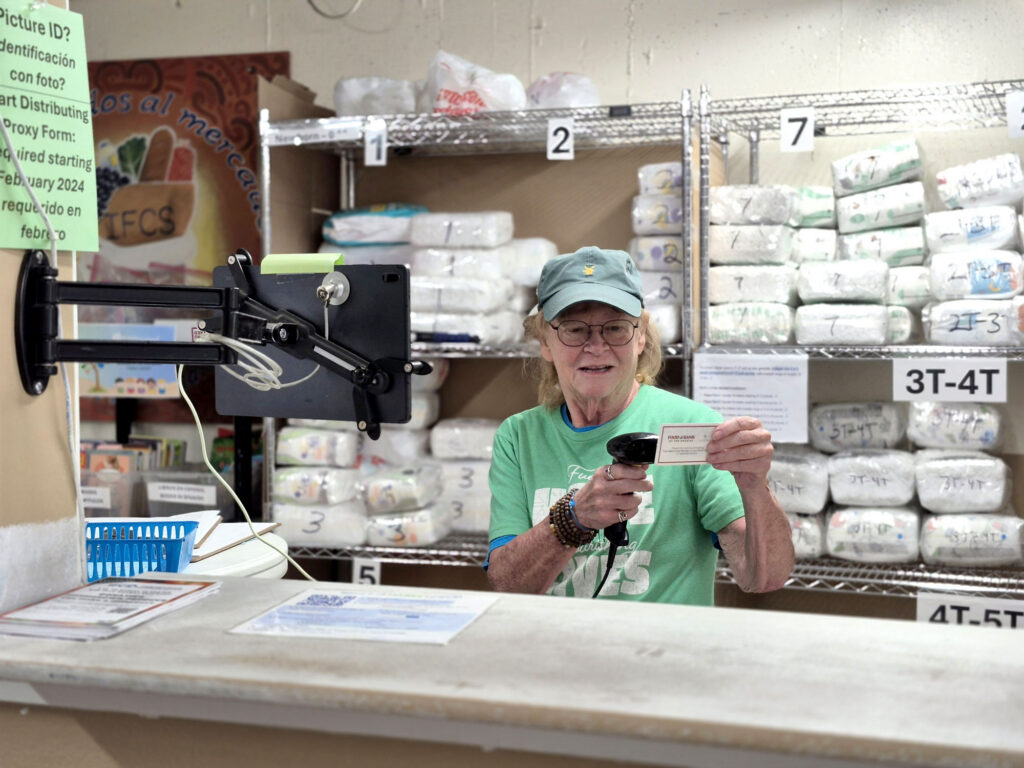
Peggy recounts some of the circumstances she encounters at IFCS: shoppers who come on foot, by bicycle, or get an Uber; some who are living in a vehicle after facing eviction. When she notices someone avoiding the canned goods, she suspects they might be experiencing homelessness: Peggy offers them a can opener that she’s picked up at a thrift store, and some plastic utensils. “We try to take care of whatever problem you have. We’ll try to help,” she says.
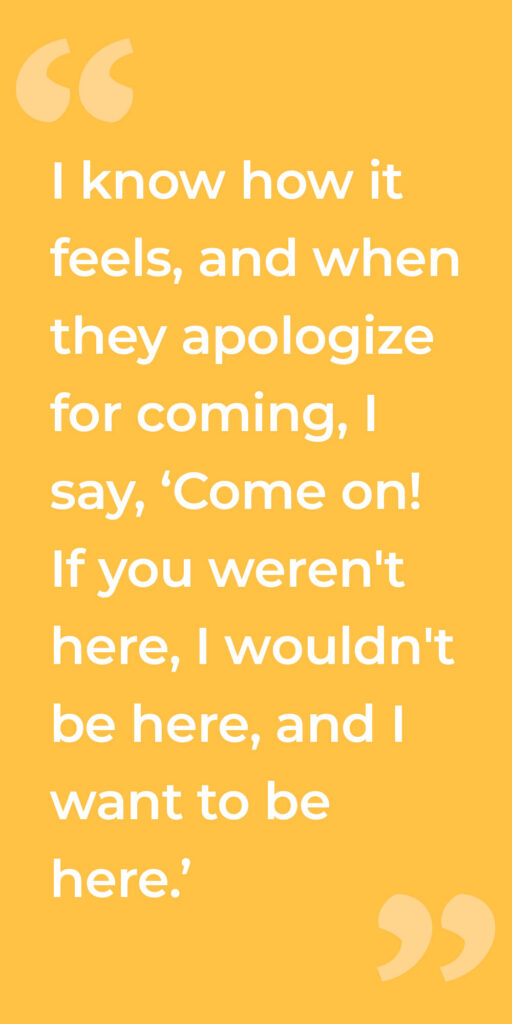
She’s investing in food support, because she knows the importance personally. “I know how it feels, and when they apologize for coming, I say, ‘Come on! If you weren’t here, I wouldn’t be here, and I want to be here. I like this job, so you have to come back. We’ll see you next month.’” Peggy puts each shopper at ease and tries to take their minds off whatever troubles they’re facing in life. She keeps things light, offering meal recommendations and pointing out special Market features of the day, such as lots of fruit, or four types of available meat. “I just put myself out there,” she says, “maybe get a jolly, maybe get a chuckle out of somebody.”
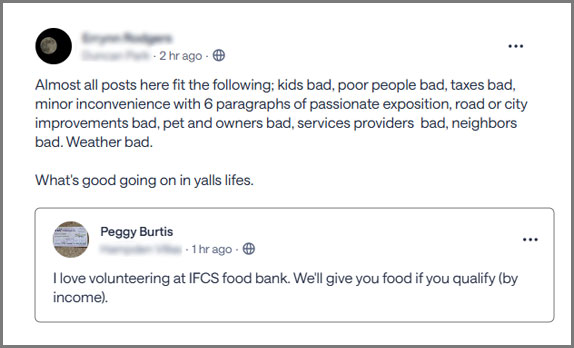
In addition to her weekly volunteer shift, Peggy also supports IFCS through outreach efforts and donations when a need becomes apparent. “We just had a flyer come out about bringing garden vegetables to IFCS, and I posted it on Facebook,” she shares. When she sees people posting on social media about needing food, she shares a photo of the IFCS business card and hours. When SNAP benefits were halted last fall, Peggy’s friend loaded up her car with food bank donations, and Peggy decided to join her. “I went to Costco that day and bought $250 worth of stuff; loaded it into her car.” She donates financially to IFCS as well. “I don’t have a lot of money, …but that’s important to me,” she says. “The things that I stand behind are the ones I want to give to.”
This investment in the community doesn’t offer Peggy any financial return: she knows she could be working at a grocery store and making an income, but volunteering is a labor of love. There’s “satisfaction in knowing that I’m putting food in somebody’s mouth,” she reflects. “I don’t care what they look like, who they are, what language they speak. Everybody’s got to eat, and whatever I can do to facilitate that, I will.”
Looking Forward, Making a Difference
Long gone are Peggy’s puzzle days; it’s for the better, since she wound up with a herniated disc from bending over that puzzle table for a year! Four years after starting as an IFCS volunteer, she’s served over 600 volunteer hours and is working for a thousand. With her schedule recently opening, she also plans to take on a second volunteer role with another nonprofit. “I don’t know that I’ll ever do another puzzle,” she concludes. And that’s best for all of us.
Thank you, Peggy, for allowing us to share this personal story, and for returning to IFCS as a dedicated volunteer and donor. We appreciate so much your investment in the community through the gifts of your time, financial contributions, and big heart!
Learn more about IFCS’ PROGRAMS & SERVICES and ADDITIONAL RESOURCES.
Learn more about investing in local food support as a volunteer with the IFCS VOLUNTEER CORE.
DONATE to expand compassion in the community through IFCS, or learn about MORE WAYS TO GIVE.