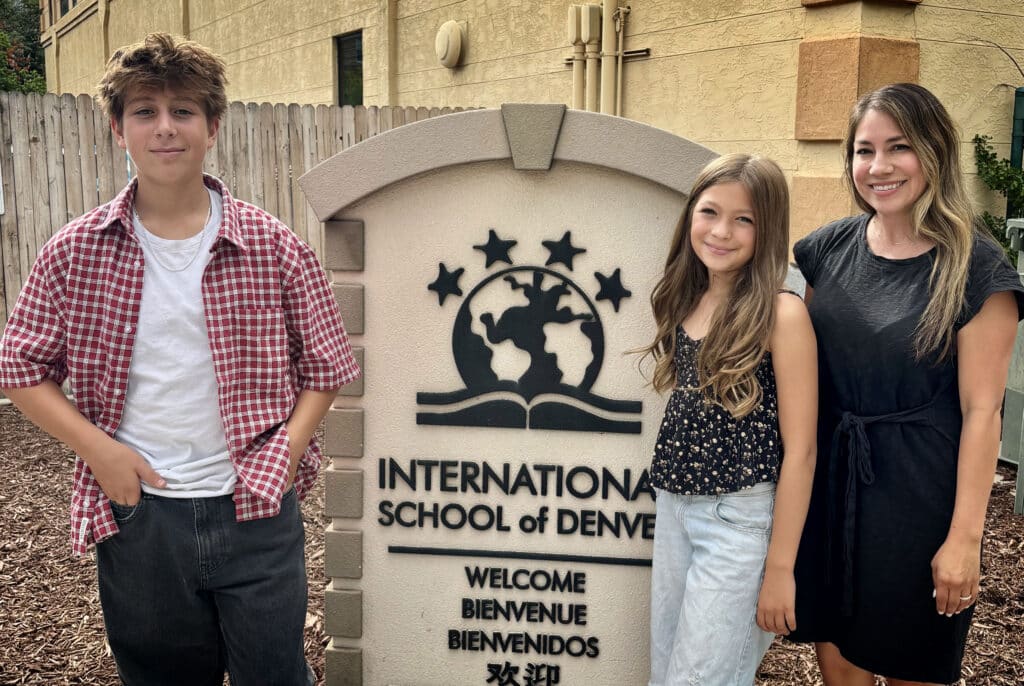
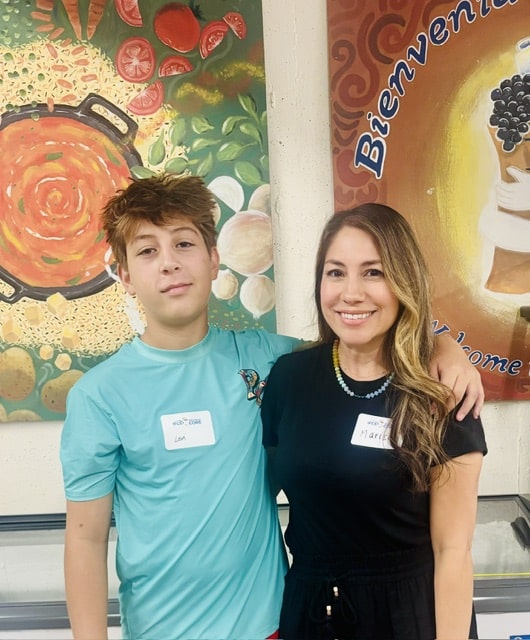
As an organization that partners with the community to alleviate hunger, IFCS relies on community support to respond to community needs. Everyone has a special role to play, and in this blog entry, we’re highlighting a family and their young students who are contributing language skills, helping hands, and welcoming hearts to our mission of nourishing lives.
The Alger Family
This past summer, Marisa Alger and her two children, Leon (age 14) and Bea (age 10), began volunteering at IFCS. Both children attend the Spanish program at The International School of Denver and are bilingual. Leon’s 8th grade curriculum includes a service project, which prompted the family’s discovery of IFCS. Marisa explains, “The 8th graders do a whole research project on an issue that they care about, and Leon wanted to be able to connect his roots to helping the Spanish-speaking community in Denver.”
The Alger family is Mexican American, with family roots in Texas dating back to the period when Texas was part of Mexico (1821-1836). “We say in Texas, ‘the border crossed us,’” Marisa says, “and we have a lot of pride in our ‘Texican’ heritage.” Because Spanish was the first language of Marisa’s mother, retaining that heritage is important to the Alger family. When Marisa was growing up, she wasn’t encouraged to speak Spanish due to assimilation pressures that asserted fluency in English as important for better educational and economic opportunities. “Part of me feels like I missed out on a lot of my cultural heritage, so it was really important when I had my own kids [that they have the opportunity] to be fluent in Spanish,” Marisa shares.
Leon Alger’s School Project
In January 2025, sweeping changes were made to U.S. immigration policy, resulting in stricter border controls, expanded interior enforcement, increased arrests and deportations, and significant restrictions on asylum. Leon, then a 7th grader, was concerned about the handling of the immigration system across the country, including Colorado. “He did a lot of research on the history of immigration, and a lot of myths that are going around about immigration,” Marisa says. As he conducted his research, Leon began to grasp the enormity of difficult issues related to immigration.
No child should have to worry about issues dividing their country, and it was a challenge for Marisa and her husband to watch Leon grappling with them. The lesson they all embraced was this: “What can alleviate your anxiety about knowing so much more about [an issue] is just to take small steps in your local community.” Leon’s research concluded that immigrants are feeling unsafe in the United States: Spanish speakers – even Spanish speakers like his own family from Texas – are now being looked at or treated in a different way. In response, he searched out ways “to make other Spanish speakers feel at home in this country,” says Marisa. The Algers set out to use their Spanish-speaking skills to serve, and to “be proud about who [we] are, to go and help people, and take those small steps,” Marisa recounts.
Volunteering at IFCS
Marisa and Leon searched for an organization where he could apply his service hours and had a difficult time finding opportunities for teenagers and parents to volunteer together. To align with her son’s research focus, she searched in the area adjacent to the Spanish-speaking community south of Denver, and found IFCS. “We landed on your website and then I was looking at the frequently asked questions; there’s even a tab [stating that] students who want to fulfill service hour requirements can sign up!” Marisa explains. “I connected with Tara at that point, and Leon also emailed… It was really wonderful that Tara responded back to us.” IFCS’ Volunteer Engagement & Training Manager, Tara Magaña, confirmed that the Algers could volunteer together at IFCS along with Bea, Leon’s younger sister.
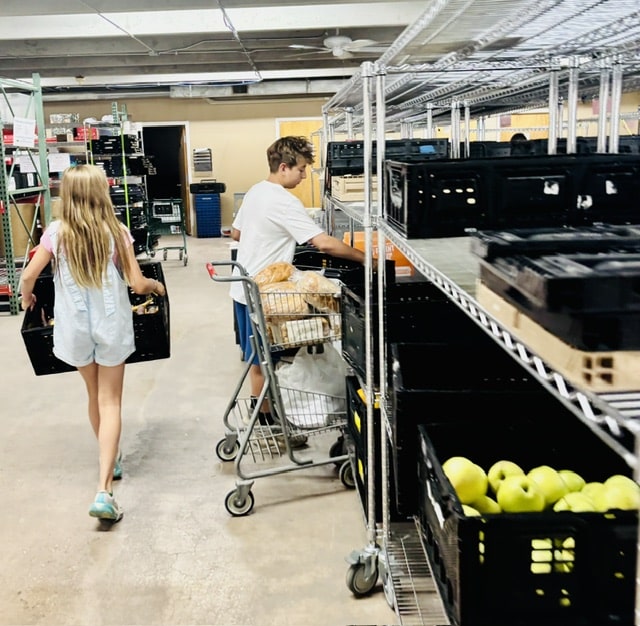
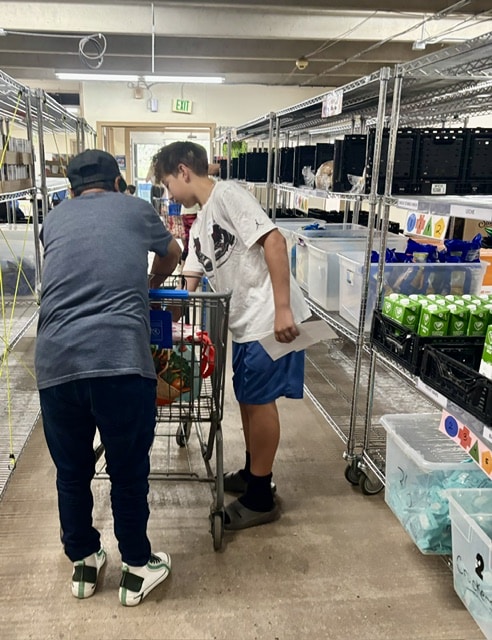
When Marisa, Leon, and Bea arrived at the Market @ IFCS to serve their three-and-a-half-hour volunteer shift, they found it easy to dive in. “The volunteers are all so warm and welcoming, and everything is so clearly labeled and easy to understand,” Marisa shares. “Even my 10-year-old daughter knew exactly what the program was when we walked in, and it was really sweet, because as the customers came in, my son and daughter were kind of fighting over who gets to take the next Spanish speakers [through the Market].” Leon shared about his school project with one of the shoppers, and could sense his ease at having a fellow Spanish-speaker guiding him through the shopping experience.
Leon and Bea noticed items like goodie bags, books, and food running out and began connecting that experience to food insecurity in other households. The experience prompted ideas for continued service, such as organizing food or book drives and creating videos to raise awareness and help others.
Expanding Partnerships in the Community
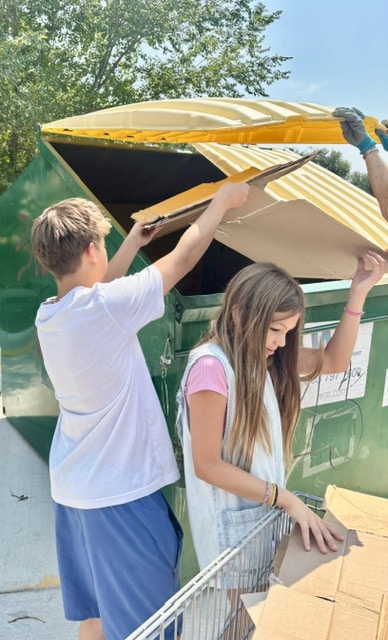
As a tutor at the University of Denver, Marisa understands the importance of education. She hopes to expand both her family’s involvement at IFCS as well as broaden the opportunities for other Spanish-speaking students. The Alger Family sees the value of bringing the Spanish-speaking community together to support each other, which aligns perfectly with IFCS’ mission of partnering with the community to alleviate hunger.
Currently, Leon and Bea are creating a bilingual video about the process of shopping the Market @ IFCS. This will make the experience more welcoming for Spanish-speakers, and will help the organization better reach the many Spanish-speaking residents in the South Denver area who are facing food insecurity.
With anticipated student projects at the International School as well as continued service hours through high school, Marisa, Leon, and Bea hope to continue their service at IFCS. “I’m thrilled that we found you, and that we’re able to, hopefully, not only do consistent food shopping volunteer shifts, but also see what other ways we can bring Spanish-speaking skills to resources, or just raising awareness,” Marisa concludes. “I’d love to be able to look back and [see the difference] we were able to make, years down the road. That would be so cool.”
We are grateful to the Alger family for allowing us to feature them in our blog and for the enthusiasm they bring to sharing their Spanish-speaking skills and rich cultural heritage at IFCS. We appreciate their commitment to helping us learn from one another and celebrate our diversity, and we look forward to working with them and other Spanish-speaking students to build a healthier, stronger community!
Learn more about IFCS’ PROGRAMS & SERVICES and ADDITIONAL RESOURCES.
Learn more about investing in local food support as a volunteer with the IFCS VOLUNTEER CORE.
DONATE to expand compassion in the community through IFCS, or learn about MORE WAYS TO GIVE.